
 by
by 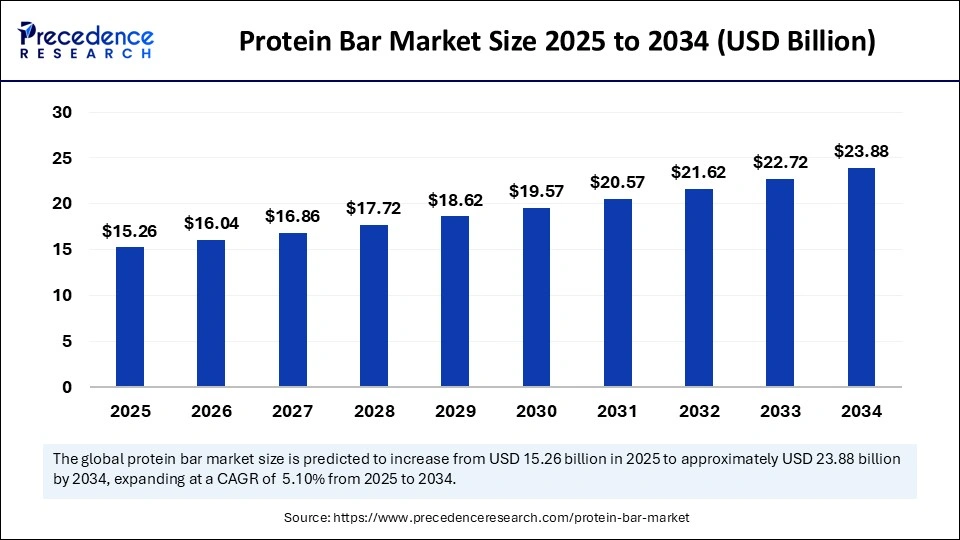
Protein Bar Market Key Points
-
North America accounted for the highest revenue share of 39% in 2024.
-
Asia Pacific is projected to grow at a notable CAGR of 6.52% from 2025 to 2034.
-
By type, the sports nutritional bars segment held the largest revenue share of 51% in 2024.
-
The meal replacement bars segment, by type, is expected to grow at a CAGR of 6.3% over the forecast period.
-
By protein source, animal-based protein bars dominated the market with a 77% revenue share in 2024.
-
The plant-based protein bars segment is anticipated to grow at a CAGR of 6.2% between 2025 and 2034.
-
By distribution channel, hypermarkets and supermarkets captured a significant 40% share of revenue in 2024.
-
The online segment, by distribution channel, is forecasted to expand rapidly at a CAGR of 6.5% from 2025 to 2034.
Protein Bar Market Overview
The protein bar market has witnessed significant expansion over the past decade, emerging as a staple in the global health and wellness industry. These convenient, nutrient-dense snacks—once largely confined to athletes and fitness enthusiasts—have now entered the mainstream as consumers across demographics seek healthier alternatives to traditional snacks and meal replacements. Protein bars are available in a variety of formulations, including high-protein, low-sugar, plant-based, keto-friendly, and gluten-free options, catering to a broad range of dietary preferences and lifestyles. With increasing consumer focus on fitness, weight management, and clean-label ingredients, protein bars have become popular not just for their nutritional profile but also for their portability and time-saving appeal. The market includes a mix of legacy players and innovative startups, with strong retail presence in supermarkets, health stores, gyms, and increasingly, through online and direct-to-consumer channels. As health-consciousness grows and food innovation accelerates, the global protein bar market is poised for sustained, robust growth.
Protein Bar Market Growth Factors
Several key trends and dynamics are fueling the growth of the protein bar market. Foremost is the global rise in health awareness and preventive nutrition, with consumers increasingly prioritizing protein intake to support muscle health, energy levels, weight loss, and overall wellness. The proliferation of active lifestyles, especially among millennials and Gen Z, has amplified the demand for on-the-go protein sources. Additionally, the market is being driven by dietary diversification, with growing demand for vegan, plant-based, and allergen-free protein bars made from pea, soy, almond, and brown rice protein rather than traditional whey or casein.
The rise of functional food consumption is also a major growth catalyst, as consumers seek products with added benefits like gut health support, mental focus, or energy boosts. Convenience remains a central driver—protein bars offer a quick solution for busy professionals, travelers, students, and athletes alike. Furthermore, the expansion of the sports nutrition category into the general wellness sector, along with product availability through e-commerce platforms, has widened the consumer base globally. Marketing innovations, celebrity endorsements, and influencer-driven campaigns are also contributing to heightened brand visibility and category growth.
Impact of AI on the Protein Bar Market
Artificial Intelligence (AI) is beginning to make a substantial impact on the protein bar market by enhancing both product innovation and operational efficiency. On the product development side, AI algorithms are being used to analyze consumer preferences, dietary trends, and nutritional gaps to formulate customized and targeted products. For example, brands are using AI to test thousands of ingredient combinations, textures, and flavors to develop protein bars that align with specific lifestyle goals—such as keto-friendly, high-fiber, or no added sugar—while maintaining taste and shelf stability.
AI also enables predictive analytics in inventory management and demand forecasting, helping manufacturers optimize production schedules, reduce waste, and manage supply chains more efficiently. In marketing, AI tools are driving personalized advertising and recommendation engines, which tailor promotions based on user behavior, preferences, and health profiles. Furthermore, smart packaging integrated with QR codes and AI-powered tracking tools is being adopted to provide consumers with detailed product information, ingredient sourcing, and sustainability credentials. As AI continues to evolve, it is expected to play a pivotal role in supporting innovation and differentiation in an increasingly saturated protein bar market.
Market Scope
| Report Coverage | Details |
| Market Size by 2034 | USD 23.88 Billion |
| Market Size in 2025 | USD 15.26 Billion |
| Market Size in 2024 | USD 14.52 Billion |
| Market Growth Rate from 2025 to 2034 | CAGR of 5.10% |
| Dominating Region | North America |
| Fastest Growing Region | Asia Pacific |
| Base Year | 2024 |
| Forecast Period | 2025 to 2034 |
| Segments Covered | Type, Protein source, Distribution Channel and Region |
| Regions Covered | North America, Europe, Asia-Pacific, Latin America, and Middle East & Africa |
Market Drivers
The market is propelled by a number of core drivers. One of the most significant is the growing global focus on protein-rich diets, spurred by heightened awareness of protein’s role in satiety, muscle repair, and metabolism. The increasing number of people engaging in sports, fitness routines, and physical training has further intensified the demand for high-protein foods. Another key driver is the shift in snacking behavior—traditional indulgent snacks are being replaced by “smart snacking” options that offer nutritional benefits without compromising taste or convenience.
Moreover, the growing acceptance and consumption of meal replacement bars—especially among time-starved consumers and dieters—has broadened the use of protein bars beyond just workouts or sports recovery. The expansion of retail channels, including convenience stores, gyms, pharmacies, and online platforms, has improved accessibility and encouraged impulse purchases. In addition, clean-label trends, where consumers demand transparency, natural ingredients, and minimal processing, have driven brands to reformulate and innovate with health-forward bar ingredients.
Opportunities
The protein bar market presents multiple exciting opportunities for further growth and expansion. First, there is substantial potential in emerging markets such as India, Southeast Asia, Latin America, and the Middle East, where rising disposable incomes, urbanization, and fitness culture are creating new demand for health-focused snacks. There is also growing opportunity in the personalized nutrition space, where AI and biotech are being leveraged to develop bars tailored to individual needs, preferences, and even genetic profiles.
Another opportunity lies in functional ingredient integration, such as adding probiotics, adaptogens, collagen, MCTs, or nootropics, to expand the health benefits of protein bars. Brands can also tap into eco-conscious consumer segments by using sustainable packaging, carbon-neutral operations, and ethically sourced ingredients. Moreover, the expansion of plant-based formulations is a rapidly growing sub-segment, driven by veganism, lactose intolerance, and environmental concerns. Collaborations with fitness brands, dieticians, and wellness platforms can further enhance credibility and reach, while subscription-based models and digital customization tools can enhance consumer loyalty and retention.
Challenges
Despite its promising outlook, the protein bar market faces several challenges. One of the primary concerns is market saturation and intense competition—with a flood of new entrants and countless brands vying for shelf space, differentiation becomes increasingly difficult. Consumers often experience “choice fatigue,” which can make it harder for new products to stand out. Additionally, achieving a balance between nutrition and palatability remains a challenge, as high-protein formulations can sometimes compromise on texture or taste, leading to consumer dissatisfaction.
Cost is another barrier. Premium ingredients such as organic whey, collagen, or plant-based proteins often drive up prices, limiting accessibility for some consumer groups. Regulatory compliance regarding health claims, labeling, and allergens is another critical hurdle, especially in markets with strict food safety standards. Supply chain disruptions, such as fluctuations in the cost of dairy or plant-based protein sources, can also impact pricing and availability. Lastly, concerns over sugar content, artificial sweeteners, and processed additives continue to influence buying decisions, prompting some health-focused consumers to seek alternatives in fresh or whole foods.
Protein Bar Market Regional Outlook
North America is the largest market for protein bars, led by the U.S. and Canada, where fitness culture, gym memberships, and the wellness movement are deeply entrenched. Consumers here are highly familiar with the category, and the region is home to many leading brands like Quest, Clif Bar, RXBAR, and KIND. Europe also represents a significant market, particularly in the UK, Germany, and Scandinavia, where demand for vegan and clean-label bars is especially high. Functional snacking trends and regulatory alignment across the EU have supported widespread adoption.
The Asia-Pacific region is expected to grow at the fastest rate, driven by rising health awareness, urban middle-class expansion, and increased gym and fitness studio penetration. Countries such as China, Japan, South Korea, and India are seeing rapid growth in demand for sports nutrition and protein-fortified foods. Latin America and the Middle East & Africa are emerging markets, where growing urbanization, rising incomes, and awareness about fitness and nutrition are contributing to increased interest in protein bars. However, affordability and cultural dietary preferences still play a role in moderating the pace of adoption.
Protein Bar Market Companies
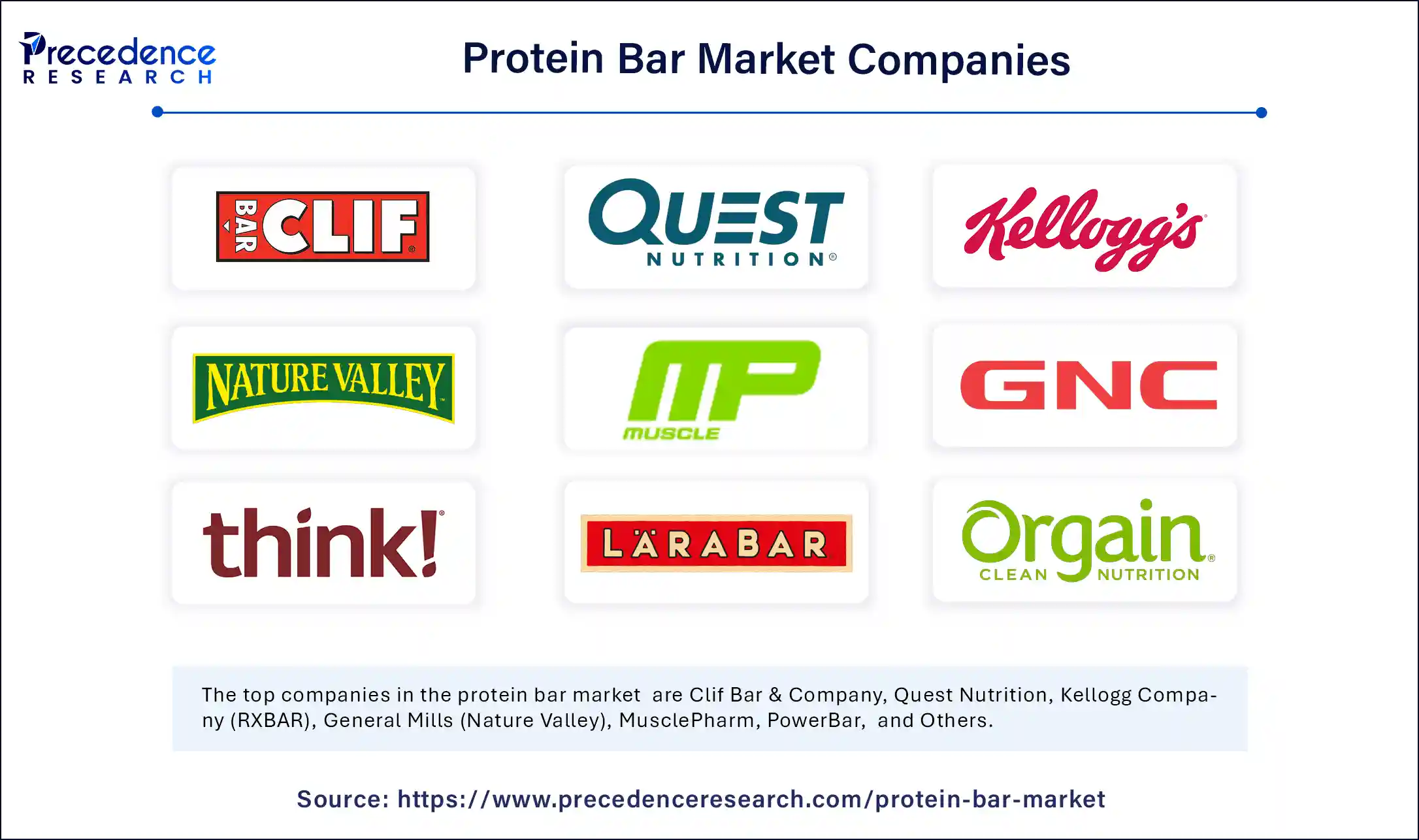
- Clif Bar & Company
- Quest Nutrition
- Kellogg Company (RXBAR)
- General Mills (Nature Valley)
- MusclePharm
- GNC (General Nutrition Corporation)
- ThinkThin (Think Products)
- Larabar (General Mills)
- Orgain
- PowerBar
Segments covered in the report
By Type
- Sports nutritional bars
- Meal replacement bars
- Others
By Protein source
- Animal-Based Protein Bars
- Plant-Based Protein Bars
By Distribution Channel
- Hypermarkets & supermarkets
- Convenience stores
- Online
- Others
By Region
- North America
- Asia Pacific
- Europe
- Latin America
- Middle East & Africa
Read Also: Vibration Monitoring Market
Get this report to explore global market size, share, CAGR, and trends, featuring detailed segmental analysis and an insightful competitive landscape overview @ https://www.precedenceresearch.com/sample/6124
You can place an order or ask any questions, please feel free to contact at sales@precedenceresearch.com|+1 804 441 9344
