
 by
by 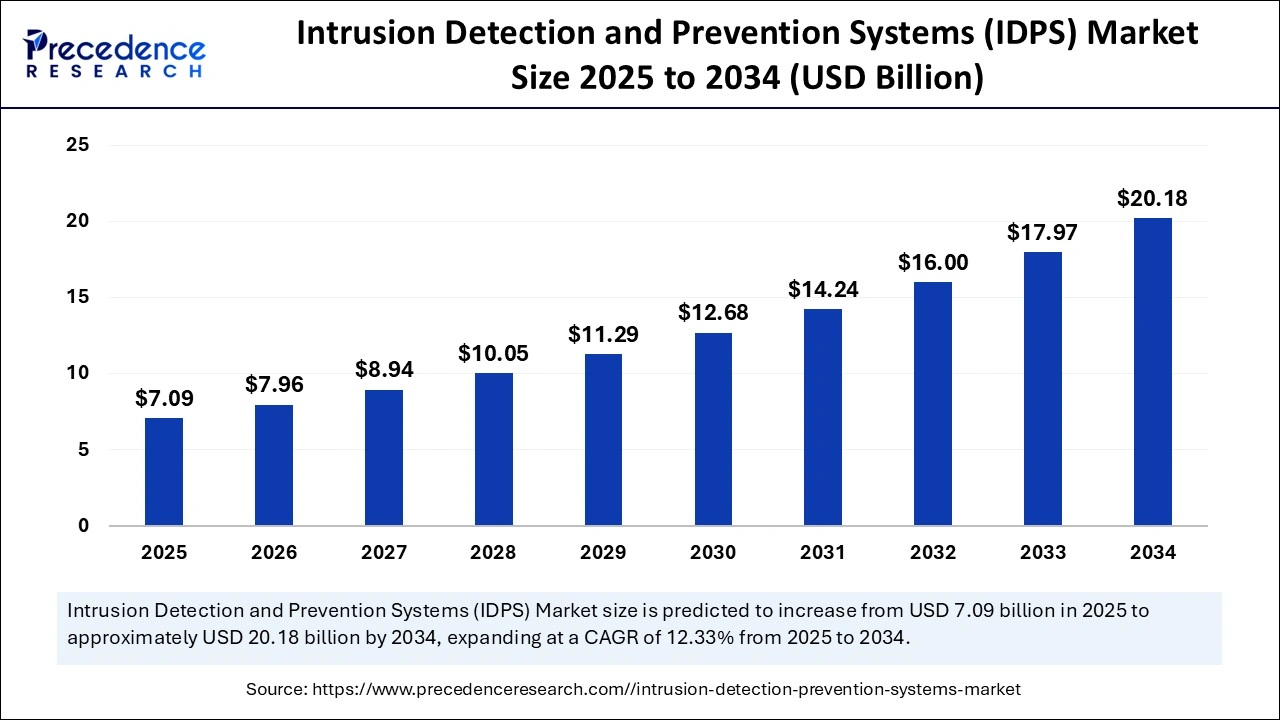
Intrusion Detection and Prevention Systems (IDPS) Market Key Points
- North America led the global market in 2024, securing the largest revenue share of 35%.
- The Asia Pacific intrusion detection and prevention systems market is anticipated to grow at the fastest CAGR of 14% during the forecast period.
- Europe is also showing strong performance, growing at a notable CAGR of 13.2% throughout the forecast period.
- By type, the network-based segment accounted for the largest market share in 2024.
- The network behavior analysis segment is projected to experience the fastest growth over the forecast period.
- In terms of component, the solution segment dominated the market with a 61% share in 2024.
- The services segment is expected to expand rapidly in the coming years.
- By technology, the network intrusion detection system (NIDS) segment held the highest market share in 2024.
- The hybrid IDS segment is forecasted to grow at the fastest pace over the projected timeframe.
- Based on deployment, the on-premises segment led the market in 2024 with the largest share.
- The cloud deployment segment is anticipated to expand rapidly during the forecast period.
- By organization size, large enterprises held the dominant market share in 2024.
- The small and medium-sized enterprises (SMEs) segment is projected to record the highest CAGR over the coming years.
- In terms of industry vertical, the banking, financial services, and insurance (BFSI) segment captured the largest share in 2024.
- The government & defense segment is expected to grow at the fastest CAGR during the forecast period.
Market Overview
The Intrusion Detection and Prevention Systems (IDPS) market has become a cornerstone of modern cybersecurity infrastructure, protecting networks and systems from malicious activities, unauthorized access, and data breaches. IDPS technologies monitor network traffic, identify abnormal patterns, and either alert administrators (IDS) or take automated corrective actions (IPS) to prevent threats in real time. As the digital transformation of enterprises accelerates and cyberattacks grow in complexity and frequency, the demand for sophisticated, real-time security solutions like IDPS is rising dramatically.
IDPS solutions are now critical in securing on-premise IT systems, cloud environments, and hybrid infrastructures across sectors such as finance, healthcare, defense, retail, and critical infrastructure. The market includes network-based, host-based, wireless, and hybrid systems, offered as both hardware appliances and cloud-based software solutions. The expansion of remote work, cloud services, IoT devices, and the proliferation of sophisticated malware and ransomware have pushed organizations to adopt advanced IDPS solutions that are adaptive, scalable, and AI-integrated.
Growth Factors
Several key factors are driving the growth of the IDPS market. Chief among them is the rapid escalation in cybersecurity threats across all sectors. Cybercriminals are deploying increasingly sophisticated tools such as zero-day exploits, polymorphic malware, and advanced persistent threats (APTs), necessitating proactive defense mechanisms. IDPS solutions help organizations monitor network traffic in real time, detect anomalies, and prevent damage before it occurs.
The surge in cloud computing and hybrid IT environments has also significantly contributed to market growth. As organizations move to the cloud, their attack surfaces expand, requiring flexible and scalable IDPS solutions that can secure dynamic, decentralized infrastructures. Similarly, the growth of remote work and bring-your-own-device (BYOD) policies have amplified the need for robust endpoint and network protection.
Another vital factor is the regulatory environment, including data protection laws like GDPR, HIPAA, and the CCPA, which impose strict requirements on cybersecurity and incident response. Organizations are under pressure to ensure compliance, and IDPS solutions are essential tools for threat detection, forensic analysis, and breach mitigation.
Furthermore, technological advances in IDPS, such as behavioral analysis, deep packet inspection, and machine learning algorithms, are enhancing their ability to detect previously unknown threats, increasing their value proposition to organizations of all sizes.
Impact of AI on the Intrusion Detection and Prevention Systems (IDPS) Market
Artificial Intelligence (AI) is transforming the IDPS market, making systems smarter, faster, and more adaptive in detecting and preventing cyber threats. AI enables IDPS platforms to analyze vast volumes of network traffic in real-time, automatically learning what constitutes normal behavior and flagging or blocking anomalous activity with high accuracy.
AI-powered IDPS systems leverage machine learning (ML) and deep learning to continuously improve their threat detection capabilities. These technologies can identify subtle patterns and correlations that traditional rule-based systems might miss, enabling the detection of zero-day exploits and sophisticated, evasive threats. Moreover, AI can reduce false positives, a long-standing challenge in conventional IDPS, ensuring that security teams are not overwhelmed with unnecessary alerts.
AI also enables automated incident response, where the system can autonomously isolate compromised segments of a network, block malicious IP addresses, and initiate predefined remediation workflows without waiting for human intervention. This is particularly valuable in fast-moving attack scenarios like ransomware or DDoS assaults.
Additionally, AI enhances threat intelligence integration, correlating internal detection data with external sources in real time to provide contextual insights and faster decision-making. As attackers evolve their tactics using AI, defenders are increasingly relying on AI-powered IDPS to stay a step ahead.
Market Scope
| Report Coverage | Details |
| Market Size by 2034 | USD 20.18 Billion |
| Market Size in 2025 | USD 7.09 Billion |
| Market Size in 2024 | USD 6.31 Billion |
| Market Growth Rate from 2025 to 2034 | CAGR of 12.33% |
| Dominating Region | North America |
| Fastest Growing Region | Asia Pacific |
| Base Year | 2024 |
| Forecast Period | 2025 to 2034 |
| Segments Covered | Type, Component, Technology, Organization Size, Vertical, and Region |
| Regions Covered | North America, Europe, Asia-Pacific, Latin America, and Middle East & Africa |
Market Drivers
The market is driven by the growing volume and sophistication of cyber threats, with enterprises facing persistent risks from phishing, ransomware, insider threats, and state-sponsored attacks. IDPS solutions serve as the frontline defense by offering real-time visibility and response capabilities.
Another driver is the expanding attack surface due to digital transformation. Cloud adoption, mobile connectivity, and IoT integration expose networks to new vulnerabilities. Organizations require IDPS that can secure both legacy systems and modern, distributed IT architectures.
Regulatory compliance and data privacy mandates are also compelling organizations to invest in advanced threat detection and prevention. IDPS systems help maintain audit trails, log critical events, and provide forensic evidence in the event of an incident—all essential for meeting regulatory requirements.
In addition, the need for continuous network monitoring in critical infrastructure and public sector organizations drives adoption. Governments and utilities, in particular, require resilient cybersecurity frameworks, and IDPS plays a central role in safeguarding against cyberwarfare and infrastructure sabotage.
Opportunities
The IDPS market presents several lucrative opportunities, especially in the small and medium enterprise (SME) segment, where awareness of cybersecurity risks is growing. Vendors offering cost-effective, scalable, and cloud-native IDPS solutions are well-positioned to tap into this expanding customer base.
The rise of cloud-native and virtualized IDPS solutions also opens doors for broader adoption. As organizations transition to multi-cloud and hybrid cloud environments, they seek solutions that are flexible, easy to integrate, and capable of securing virtual networks and containers.
Another major opportunity lies in the integration of IDPS with Security Information and Event Management (SIEM) and Security Orchestration, Automation, and Response (SOAR) platforms. Unified security ecosystems allow for better correlation, analytics, and automated responses, delivering enhanced protection and operational efficiency.
There is also growing potential in securing critical infrastructure and smart cities, where IDPS can be tailored to protect SCADA systems, industrial control networks, and connected infrastructure. These sectors, facing a rise in cyber-physical threats, are increasingly investing in layered security that includes advanced detection and prevention capabilities.
Challenges
Despite strong growth potential, the IDPS market faces several challenges. One of the most significant is the high rate of false positives, which can lead to alert fatigue among security teams. Although AI is mitigating this issue, tuning and managing IDPS systems to balance sensitivity and accuracy remains complex.
The increasing encryption of network traffic also poses a challenge. Encrypted data is harder to inspect, and traditional IDPS tools may struggle to detect threats hidden within secure channels without compromising performance or privacy.
Another major challenge is the shortage of skilled cybersecurity professionals, which can limit the effectiveness of IDPS implementation and monitoring. While automation and AI are helping to bridge this gap, many organizations still struggle to maintain around-the-clock threat monitoring and response capabilities.
Integration complexity is another hurdle. In large enterprises with diverse and legacy infrastructure, deploying and integrating IDPS systems with existing security tools can be time-consuming and costly, especially when interoperability is lacking.
Finally, cost sensitivity among SMEs and budget constraints in the public sector may limit adoption, particularly of more advanced or AI-enhanced IDPS solutions.
Regional Outlook
North America is the dominant region in the global IDPS market, driven by a high concentration of tech companies, advanced infrastructure, and heightened cybersecurity awareness. The U.S. leads in both adoption and innovation, supported by federal mandates, a strong legal framework, and significant investment in critical infrastructure protection.
Europe follows closely, with GDPR and other regional data privacy laws serving as strong drivers of IDPS deployment. Countries such as Germany, France, and the UK are focusing on strengthening digital resilience, especially in financial services and healthcare, where data protection is paramount.
Asia-Pacific is the fastest-growing market, fueled by rapid digitalization, expanding internet penetration, and a rise in sophisticated cyberattacks targeting major economies like China, India, Japan, and South Korea. Governments in the region are investing in national cybersecurity strategies, offering substantial growth opportunities for IDPS vendors.
Latin America and the Middle East & Africa are emerging markets with increasing demand for cybersecurity solutions, particularly in the banking, energy, and telecommunications sectors. While market growth is constrained by infrastructure and budget limitations, rising cybercrime levels and international partnerships are expected to drive steady adoption.
Intrusion Detection and Prevention Systems (IDPS) Market Companies
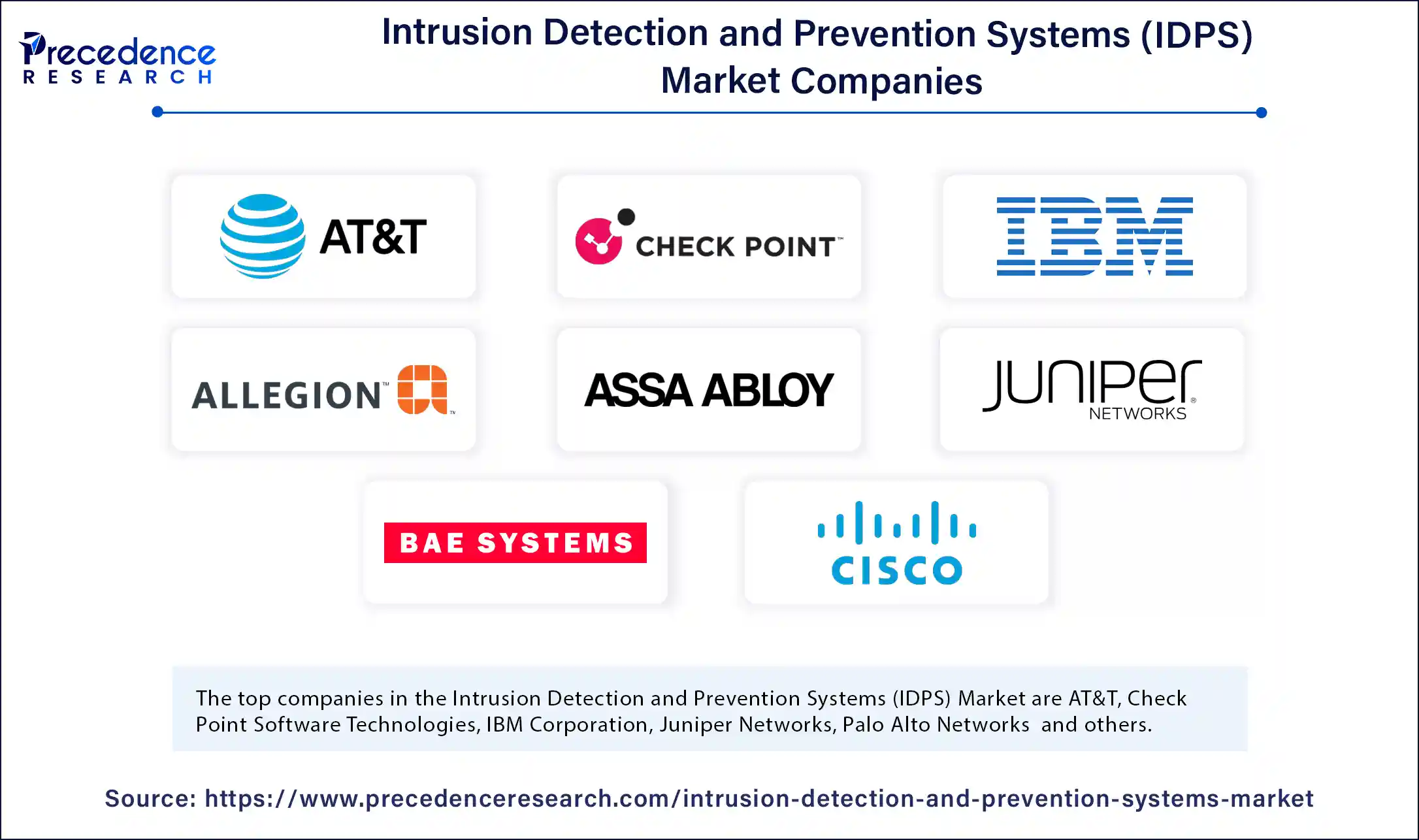
- AT&T
- Check Point Software Technologies
- IBM Corporation
- Allegion plc
- ASSA ABLOY
- Juniper Networks
- BAE Systems
- Cisco Systems, Inc.
- Fortinet, Inc
- Palo Alto Networks
- Robert Bosch GmbH
- Sophos Ltd
Segment Covered in the Report
By Type
- Network-based
- Network Behavior Analysis
- Wireless-based
- Host-based
By Component
- Solution
- Services
By Technology
- Network Intrusion Detection System (NIDS)
- Host Intrusion Detection System (HIDS)
- Network Intrusion Prevention System (NIPS)
- Hybrid IDS
- Host Intrusion Prevention System (HIPS)
- Others
By Deployment
- On-premises
- Cloud
By Organization Size
- SMEs
- Large enterprises
By Vertical
- BFSI
- Manufacturing
- IT & Telecom
- Healthcare
- Retail & E-commerce
- Government & Defense
- Others
By Region
- North America
- Europe
- Asia Pacific
- Latin America
- Middle East and Africa
Read Also: Digital Legacy Market
Get this report to explore global market size, share, CAGR, and trends, featuring detailed segmental analysis and an insightful competitive landscape overview @ https://www.precedenceresearch.com/sample/6109
You can place an order or ask any questions, please feel free to contact at sales@precedenceresearch.com|+1 804 441 9344
