
 by
by 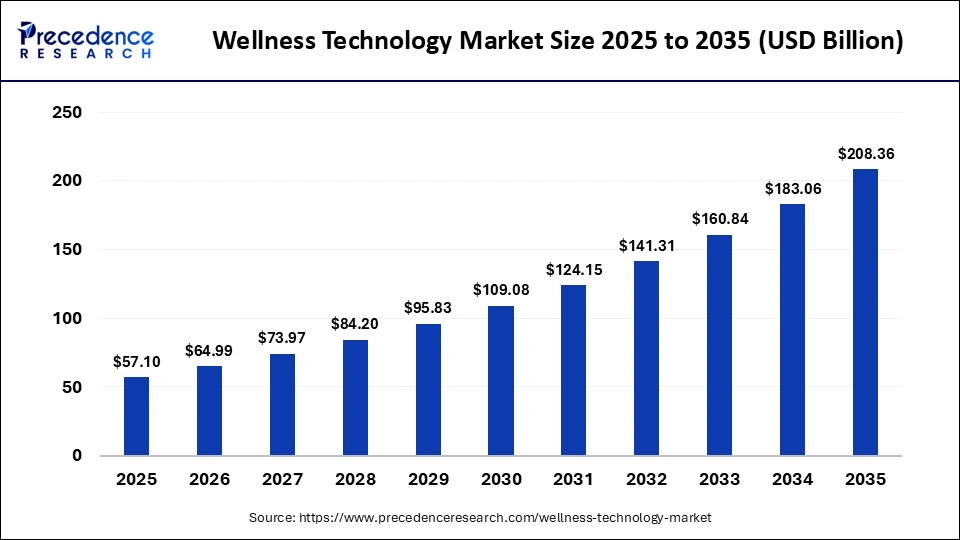
Market Highlights
- North America accounted for the largest market share of 43.50% in 2025.
- The Asia Pacific is expected to grow at the fastest CAGR of 13.5% from 2026 to 2035.
- By type/technology, the wearable devices segment contributed the biggest market share of 48.6% in 2025.
- By type/technology, the software analytics & platform segment is growing at a notable CAGR of 12.6% from 2026 to 2035.
- By application, the fitness & activity tracking segment held the major market share of 43.5% in 2025.
- By application, the mental health & mindfulness segment is poised to grow at a strong CAGR of 12.4% from 2026 to 2035.
- By end-user, the individual consumers segment captured the highest market share of 48.5% in 2025.
- By end-user, the corporate/employer wellness segment is projected to grow at the fastest CAGR of 12.6% from 2026 to 2035.
What is Wellness Technology?
Wellness technology refers to a broad range of digital, connected solutions designed to enhance physical, mental, and overall well-being for both individuals and organizations. This market encompasses wearable devices, mobile wellness apps, cloud-based software platforms, and smart home wellness systems that support continuous tracking, monitoring, coaching, and personalized health insights related to fitness, stress management, sleep, nutrition, and lifestyle habits.
These technologies play a growing role in preventive health by enabling early identification of potential health risks, encouraging healthier daily routines, and helping users manage chronic stress and lifestyle-related conditions. Beyond individual use, employers, insurers, and healthcare providers are increasingly adopting wellness technologies to strengthen workforce well-being, lower healthcare costs, and boost productivity through data-driven wellness programs.
Market growth is fueled by rising health awareness, increasing demand for personalized and preventive care, and widespread adoption of smartphones and wearable devices. The integration of artificial intelligence, cloud computing, and mobile connectivity allows real-time analytics, adaptive recommendations, and tailored user experiences positioning wellness technology as a foundational pillar of the modern digital health ecosystem.
AI-Driven Transformation in the Wellness Technology Market
The integration of artificial intelligence into fitness and wellness technologies has moved far beyond basic personalization, enabling real-time monitoring of critical health parameters such as blood pressure, SpO₂, hemoglobin levels, heart rate variability, and physical activity metrics. These advanced capabilities strengthen preventive healthcare by supporting early detection of health risks and identifying deviations from normal patterns before they develop into serious conditions.
Continuous, automated data collection combined with real-time analytics enhances user trust by delivering timely insights, alerts, and actionable recommendations. AI-powered systems analyze both historical and live data to evaluate risk probabilities, suggest corrective actions, and guide informed decision-making around daily wellness and lifestyle choices.
In addition, AI-driven wellness platforms significantly improve user engagement through adaptive feedback, personalized goal setting, intelligent coaching, and motivational reinforcement such as progress visualization and achievement tracking. As AI models advance in parallel with improvements in sensor accuracy, wearable integration, and data processing capabilities, fitness and wellness technologies are increasingly delivering sophisticated, highly personalized, and outcome-focused programs that support long-term health goals and sustainable well-being.
Growth Factors Driving the Wellness Technology Market
- Rising Health Consciousness & Preventive Care Demand: Consumers globally are increasingly prioritizing preventive health and holistic well-being, driving adoption of connected devices and digital health platforms that monitor fitness, sleep, stress, and vital signs. This trend is a core driver of sustained market growth.
- Advancements in AI, Data Analytics & Sensor Technologies: Integration of artificial intelligence, real-time analytics, and high-accuracy sensors enables personalized health insights, predictive risk detection, and adaptive coaching boosting user engagement and outcomes.
- Expanding Corporate & Healthcare Adoption: Employers and healthcare providers are embedding wellness technology into corporate wellness programs and clinical workflows to improve workforce health, reduce costs, and enhance remote patient monitoring.
- Smartphone & Wearable Penetration: Growing smartphone ownership and the proliferation of affordable wearable devices make wellness tracking accessible to broader populations, particularly in fast-digitizing regions.
- Investment, Partnerships & Health Tech Innovation: Venture capital funding, strategic collaborations between technology firms and healthcare entities, and continuous R&D are accelerating platform development and expanding solution ecosystems.
- Government Initiatives & Digital Health Policies: National digital health strategies and public policy support for preventive care and telehealth infrastructure are catalyzing market adoption, especially in Asia Pacific and parts of Europe.
Regional Market Insights
North America holds the largest share of the global wellness technology market, anchored by high consumer awareness, advanced healthcare systems, and strong technology adoption. The United States and Canada boast significant penetration of wearable devices, mobile wellness apps, and data-driven platforms, supported by favorable infrastructure and regulatory environments. Corporate wellness initiatives and investments in digital health contribute further to region-wide expansion.
Asia Pacific is projected to register the highest compound annual growth rates over the coming decade. Drivers include rapid smartphone adoption, rising disposable incomes, expanding middle-class populations, and supportive digital health policies in countries like China, India, and Japan. Government programs emphasizing preventive health and digitalization (e.g., national health strategies) are accelerating uptake of connected wellness solutions.
Europe is a significant market with steady growth underpinned by strong public interest in preventive healthcare and supportive regulatory frameworks. Countries including Germany, the UK, and France show notable demand for integrated wellness platforms, mental health tools, and wearable devices.
These regions are witnessing gradual expansion as digital infrastructure improves and public awareness of wellness tech rises. Emerging markets such as Brazil, Mexico, UAE, and Saudi Arabia are investing in healthcare digitization and remote wellness solutions, creating new opportunities for localized products and services.
Top Companies in Wellness Technology Market & their Offerings
- Apple Inc.
- Google LLC (Fitbit)
- Garmin Ltd.
- Samsung Electronics Co., Ltd
- Peloton Interactive, Inc.
- WHOOP, Inc.
- Oura Health Oy
- Withings
- Philips Healthcare
- Xiaomi Corporation
- Headspace Health
- Calm.com, Inc.
- Mindbody, Inc.
- Technogym S.p.A.
- Medtronic plc
Recent Developments
- In July 2025, Samsung Electronics announced their collaboration with Xealth, which is a unique healthcare platform that offers medical care seamlessly with a digital platform.
- In December, A leading healthcare startup focused on longevity, GABIT has acquired clean nutrition brand NACK based in Sweden, aiming to focus on supplement offerings and nutrition with its outcomes.
Segments Covered in the Report
By Type/Technology
- Wearable Devices
- Software Analytics & Platforms
- Mobile Apps
- Smart Home Wellness Devices
- Others
By Application
- Fitness & Activity Tracking
- Mental-Health & Mindfulness
- Corporate Wellness Programmes
- Home-Wellness Environments
- Others
By End-User
- Individual Consumers/Direct-to-Consumer
- Corporate/Employer Wellness
- Healthcare Providers
- Senior-Living & Residential Wellness
- Others
By Region
- North America
- Europe
- Asia-Pacific
- Latin America
- Middle East & Africa
Get Sample Link: https://www.precedenceresearch.com/sample/7289
