
 by
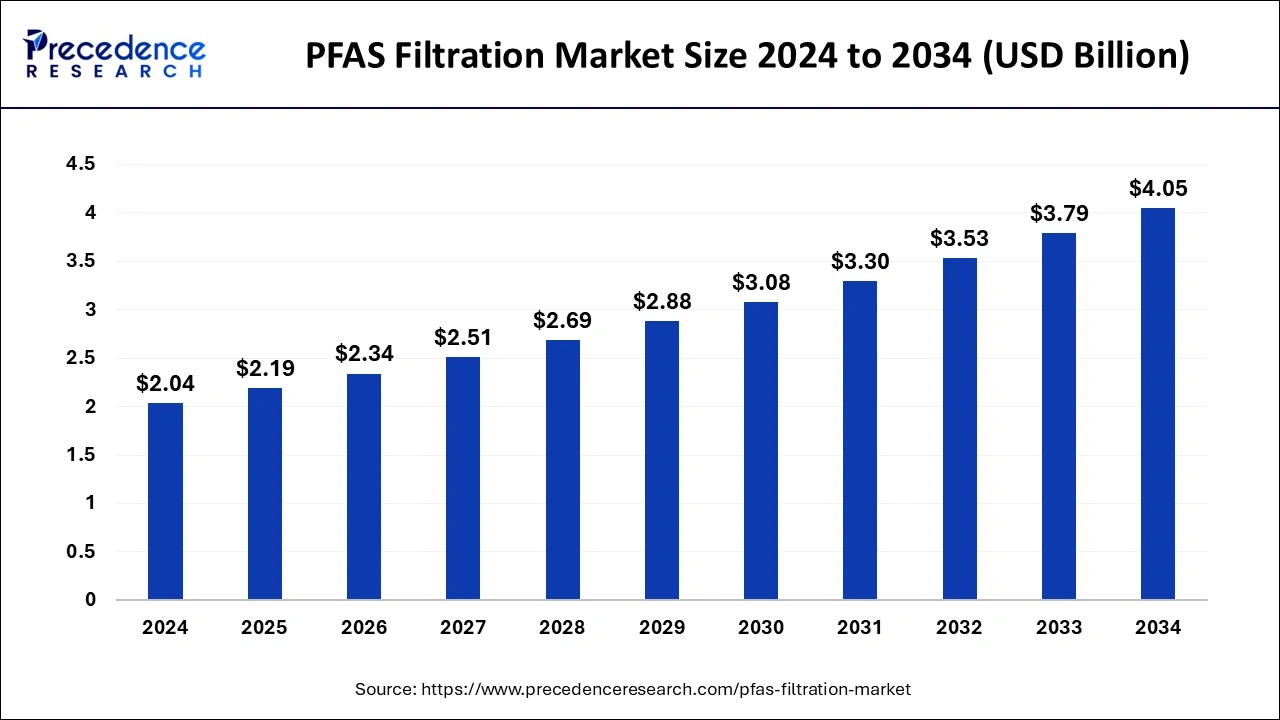
by The global PFAS filtration market is witnessing significant growth as regulatory pressures, technological innovation, and rising environmental concerns drive demand across industries and regions. Estimated at USD 2.04 billion in 2024, the market is projected to reach approximately USD 4.05 billion by 2034, growing at a CAGR of 7.11% from 2025 to 2034.
Understanding the PFAS Challenge
Perfluoroalkyl and Polyfluoroalkyl Substances (PFAS), commonly known as “forever chemicals,” have become a pressing concern worldwide due to their persistence in the environment and harmful health effects. Found in drinking water, food, soil, and even air, PFAS compounds have been linked to conditions such as cancer, thyroid disorders, liver damage, and developmental issues. Their widespread use in consumer and industrial products makes them difficult to avoid—and even harder to eliminate.
To combat this threat, PFAS filtration technologies have become critical to municipal water treatment systems, industrial wastewater management, and even household filtration systems.
Key Market Takeaways
-
Asia Pacific led the global market in 2024, driven by rapid industrialization and growing environmental awareness.
-
North America is anticipated to record the fastest CAGR during the forecast period, supported by aggressive EPA regulations and infrastructure investments.
-
Granular Activated Carbon (GAC) dominated the technology segment with a 32.4% market share in 2024.
-
Membrane Filtration is projected to grow at a CAGR of 9.70% due to its efficiency in removing both long and short-chain PFAS.
-
The activated carbon media segment led with a 38.10% share, while bio-adsorbents and nanomaterials are growing fastest at a 10.50% CAGR.
-
Water treatment held the highest application share (41.60%), followed by site remediation, expected to expand at 9.90% CAGR.
-
Municipal water utilities accounted for the largest end-use share (36.80%), while the residential segment is growing rapidly at 9.50%.
-
In distribution, direct sales led with 34.20%, but online retail is gaining momentum.
How AI Is Transforming PFAS Filtration
Artificial Intelligence (AI) is playing a pivotal role in developing next-generation PFAS filtration systems. Researchers are using machine learning algorithms to optimize water purification processes, detect ion concentrations with greater accuracy, and create zero-pollution solutions. This AI-led innovation is also helping national water quality management systems deploy smart detection and treatment methods with increased precision and efficiency.
Market Drivers
1. Heightened Health Awareness
Increased public awareness of PFAS-linked diseases has driven demand for filtration systems across residential, commercial, and municipal sectors.
2. Regulatory Push
Governments and environmental agencies, especially the U.S. EPA, have tightened controls on PFAS emissions and contamination, mandating proactive treatment and reporting.
3. Service Continuity
Filtration technologies help utilities avoid disruptions caused by PFAS contamination, allowing continuous, safe water delivery.
4. Environmental Protection
PFAS filtration prevents contamination of ecosystems during chemical production, usage, and disposal—supporting long-term sustainability goals.
Key Challenges
Despite the demand, high costs remain a major barrier to widespread PFAS treatment adoption. The current expense of removing PFAS from global water systems is projected to exceed USD 106 trillion, raising concerns about the economic feasibility of large-scale solutions.
Emerging Opportunities
Biological treatment methods are gaining traction due to their low cost, eco-friendliness, and ease of use. Techniques like bioremediation, phytoremediation, and bioadsorption are being explored as alternatives to chemical-based filtration systems.
Segment Highlights
Technology Insights
-
Granular Activated Carbon (GAC) remains the most adopted due to its affordability and integration ease.
-
Membrane filtration (including reverse osmosis and nanofiltration) is ideal for high-precision removal, especially for short-chain PFAS.
-
Advanced Oxidation Processes (AOPs) and electrochemical treatments are gaining momentum for industrial applications.
Media Type Insights
-
Activated carbon, especially coconut shell and coal-based variants, dominate current systems.
-
Nanomaterials such as graphene oxide and biochar offer better selectivity and regeneration potential.
Application Insights
-
Drinking water and wastewater treatment lead current demand.
-
Site remediation is rising due to regulatory pressure to clean industrial zones and polluted land.
End-Use Industry Insights
-
Municipal utilities are the largest adopters.
-
Residential users are increasingly installing point-of-use and whole-home systems due to rising health concerns and product availability.
Distribution Channel Insights
-
Direct sales remain strong in industrial segments.
-
Online retail is rapidly expanding, particularly in residential applications due to consumer convenience.
Regional Outlook
Asia Pacific: Current Leader
With rapid urbanization, rising pollution awareness, and substantial investment in smart water technologies, the region is leading in adoption. Countries like India, China, and Singapore are proactively integrating PFAS treatment technologies.
North America: Fastest Growing
The U.S. and Canada are setting stringent PFAS regulations, supported by large federal investments. For instance, the Bipartisan Infrastructure Law allocated USD 1 billion to improve PFAS detection and treatment.
Europe, Latin America, and MEA
These regions are gradually adopting PFAS filtration due to rising environmental awareness, EU regulations, and funding support, but still lag behind Asia and North America in terms of large-scale deployment.
Competitive Landscape
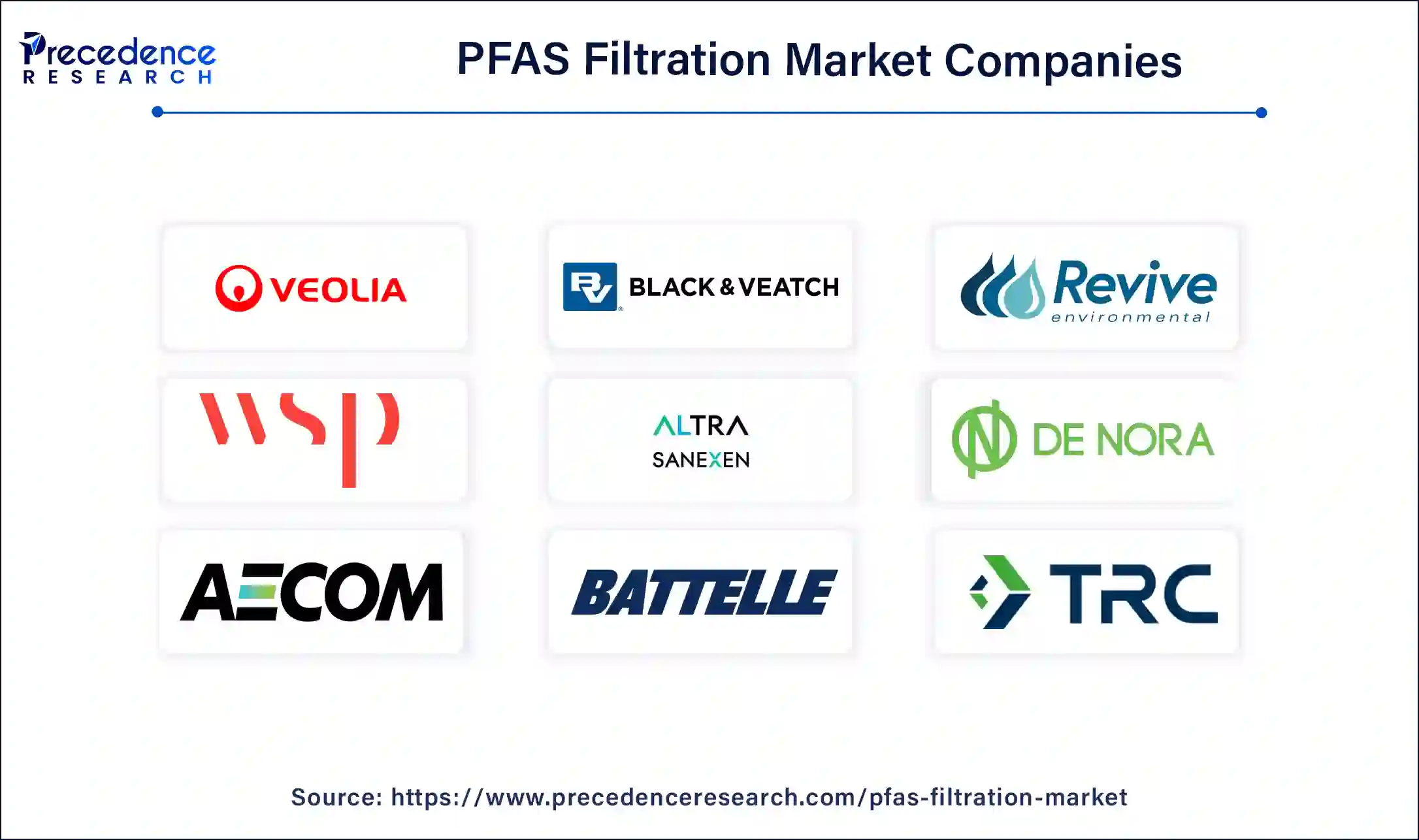
-
Revive Environmental
-
De Nora
-
Calgon Carbon Corporation
-
Cyclopure, Inc.
-
WSP
-
AECOM
-
Gradiant
-
Clean Earth
-
Battelle Memorial Institute
Recent Developments
-
October 2024: Veolia launched BeyondPFAS, an integrated service offering to help customers achieve PFAS compliance and operational efficiency.
-
September 2024: De Nora introduced SORB™ FX vessels, treating up to 2,800 GPM, delivering advanced PFAS removal with scalable technology.
Final Thoughts
As environmental, health, and regulatory demands intensify, the PFAS filtration market is poised for dynamic expansion through 2034. Innovation, especially in AI-powered systems, biological methods, and advanced filtration technologies, will be key to overcoming current cost challenges and ensuring safe, clean water for future generations.
For bulk licensing, detailed research access, or custom reports, please reach out to us at sales@precedenceresearch.com.
