
 by
by The global market for next generation delivery systems for genetic drugs is entering a breakthrough phase, This momentum is driven by rapid advancements in gene editing, increased clinical adoption of mRNA-based therapies, and a pressing need for efficient, safe, and scalable delivery mechanisms for genetic drugs. As more therapies transition from the lab to the clinic, delivery systems are becoming pivotal in determining therapeutic success, efficacy, and patient safety.
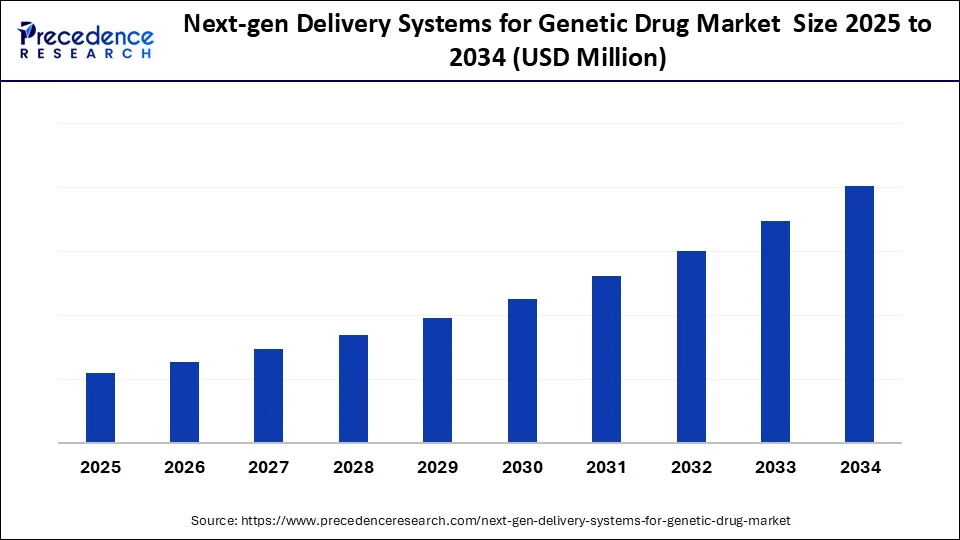
Next-Gen Delivery Systems for Genetic Drug Market Key Points
- North America dominated the next-gen delivery systems for genetic drug market in 2024.
- Asia Pacific is expected to grow at a notable CAGR during the forecast period.
- By delivery system type, the lipid-based delivery segment held the largest share in 2024.
- By delivery system type, the peptide-based delivery systems segment is observed to grow at the fastest CAGR during the forecast period.
- By genetic drug type, the gene therapy (DNA-based) segment captured the biggest market share in 2024.
- By genetic drug type, RNA-based therapeutics are expected to grow at the fastest CAGR during the forecast period.
- By target organ/tissue, the liver segment contributed the highest market share in 2024.
- By target organ/tissue, the tumor/malignant tissue segment is emerging as the fastest growing.
- By administration route, the intravenous (IV) segment generated the major market share in 2024.
- By administration route, the oral segment is expected to grow at the fastest CAGR during the forecast period.
- By application, the oncology segment held the largest market share in 2024.
- By application, the neurology segment is expected to grow at the fastest CAGR during the forecast period.
- By end user, the hospitals & specialized clinics segment accounted for the significant market share 2024.
- By end user, the contract research organizations segment is expected to grow at the fastest rate during the fastest period.
Why Genetic Drug Delivery Is the Next Frontier
While genetic therapies offer unparalleled potential to treat or even cure genetic and chronic diseases, their success depends heavily on how effectively genetic material is delivered to the right cells. Traditional delivery methods—especially viral vectors—pose limitations such as high immunogenicity, complexity in large-scale production, and safety concerns. In contrast, next-generation non-viral vectors such as lipid nanoparticles (LNPs), biodegradable polymers, and exosomes are proving to be safer, more tunable, and highly scalable. These systems are paving the way for more precise, tissue-specific drug delivery solutions, critical for treating conditions like cancer, neurological disorders, and rare inherited diseases.
North America: The Innovation Powerhouse
North America remains the undisputed leader in this market, backed by a world-class biotech ecosystem, early regulatory approvals, and cutting-edge research institutions. The presence of industry giants like Moderna, Sangamo Therapeutics, and BioNTech SE has propelled the region to the forefront of innovation. The U.S. government’s increasing support for genomic medicine and growing venture capital activity have also created fertile ground for clinical breakthroughs. In addition, partnerships between academic institutions and biotech companies are accelerating the development of novel delivery systems for gene therapy, RNA therapeutics, and DNA vaccines.
Asia Pacific: Rising Biomedical Innovation Hub
While North America leads, Asia Pacific is quickly becoming a hub of innovation and investment in genetic delivery systems. Countries like China, Japan, and South Korea are heavily investing in biotech R&D and manufacturing capacity, supported by favorable government policies. These nations are strategically positioning themselves to support clinical trials, build domestic biotech capabilities, and bring down production costs, thus opening lucrative market opportunities for next-gen delivery system developers.
Segmentation Analysis: Where Innovation Is Focused
From a delivery technology perspective, non-viral vectors are gaining ground due to their reduced immune response risk, broader payload compatibility, and ease of production. Among these, lipid nanoparticles (LNPs)—famous for their use in COVID-19 mRNA vaccines—are now being adapted for gene editing, cancer therapies, and rare disease treatments. In terms of application, oncology and genetic disorders are the primary segments driving growth. mRNA vaccines for cancer and RNA-based therapeutics for inherited diseases are leading current pipelines, with additional expansion expected in infectious disease and neurological indications.
Next-Gen Delivery Systems for Genetic Drug Market Scope
| Report Coverage | Details |
| Dominating Region | North America |
| Fastest Growing Region | Asia Pacific |
| Base Year | 2024 |
| Forecast Period | 2025 to 2034 |
| Segments Covered | Delivery System Type, Genetic Drug Type, Target Organ/Tissue, Administration Route, Application, End-User, and Region |
| Regions Covered | North America, Europe, Asia-Pacific, Latin America, and Middle East & Africa |
Recent Breakthroughs from Key Players
Top industry players are shaping the trajectory of the market through strategic R&D, partnerships, and clinical advancements. Moderna is extending its LNP platform beyond vaccines into rare genetic disease treatment. BioNTech SE is diversifying into siRNA and CRISPR-based therapies, supported by its success in mRNA delivery. Meanwhile, Sangamo Therapeutics is enhancing its proprietary zinc finger technology with next-gen delivery vehicles aimed at improving precision and reducing off-target effects. These breakthroughs are not only accelerating the pace of innovation but also defining industry standards for delivery efficacy and patient outcomes.
Read Also: Automotive PQC Market Size, Share, Report by 2034
What Are the Opportunities and Challenges in This Market?
The massive therapeutic promise of genetic drugs has put delivery systems at center stage. However, the field is not without its hurdles. High development costs, stringent regulatory pathways, and the biological complexity of delivering genetic payloads to specific tissues remain key obstacles. Moreover, challenges such as navigating the blood-brain barrier, avoiding immune reactions, and ensuring intracellular release are still being addressed. Nevertheless, opportunities abound: advancements in biodegradable materials, AI-assisted formulation design, and targeted nanoparticle engineering are reshaping what’s possible in this space.
Expert Perspective: What’s Next for the Industry?
“The convergence of nanotechnology, gene editing, and AI-powered drug design is transforming the delivery landscape for genetic therapies,” says Dr. Mira Das, Principal Consultant at Precedence Research.
“We’re entering an era where delivery mechanisms will be as valuable as the therapies themselves. Those who solve intracellular delivery will be tomorrow’s leaders.”
Case Example: LNPs Transition from Vaccines to Oncology
The success story of lipid nanoparticles in mRNA COVID-19 vaccines has validated their scalability and safety, opening doors for broader use. Several biotech firms are now repurposing LNPs for personalized cancer vaccines, targeting tumors with high precision while avoiding systemic toxicity. This transition represents the future of immunotherapy—where delivery platforms are adapted across therapeutic categories, saving development time and unlocking new revenue streams.
Get the Full Report: Data, Trends, and Forecasts
For a complete view of the next-generation delivery systems for genetic drugs—complete with regional forecasts, detailed segmentation, innovation mapping, and profiles of key market participants—access our full report or schedule a strategy session with one of our analysts.
