
 by
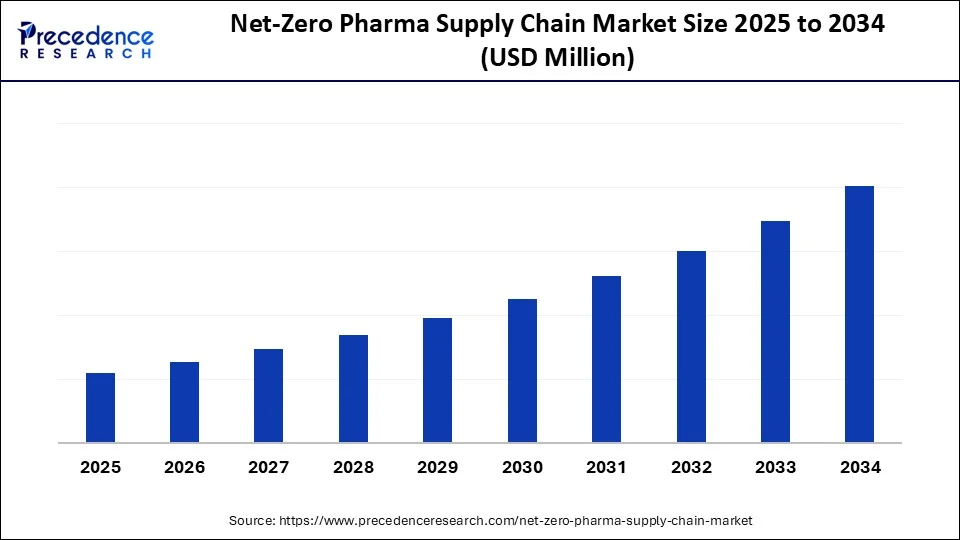
by The global net‑zero pharma supply chain market is undergoing a rapid transformation. Net‑zero supply chain initiatives are expanding beyond the laboratory as manufacturers, suppliers and logistics providers collaborate on green transport, standardised lifecycle assessments and scope‑3 data sharing. In 2024 Europe dominated the market thanks to its ambitious sustainability programmes, while Asia Pacific is expected to grow at the fastest pace between 2025 and 2034.
Quick Insights
| Metric | Details |
| Largest region (2024) | Europe, due to stringent climate reporting requirements and high ESG integration |
| Fastest‑growing region | Asia Pacific – national net‑zero strategies in China, India, Japan and South Korea drive investments in renewable energy and sustainable supply chains |
| Leading scope in supply chain (2024) | Cold chain & logistics; temperature‑controlled storage and eco‑friendly transport remain critical for biologics and vaccines |
| High‑growth scope segment | End‑to‑end carbon management platforms, projected to grow at a significant CAGR |
| Top component | Solutions segment led with the largest revenue share owing to carbon‑tracking software and sustainable packaging; services segment expected to expand rapidly |
| Dominant emission focus | Scope 3 emissions, reflecting heightened attention on indirect emissions across suppliers |
| Preferred deployment model | Cloud‑based platforms enable real‑time emissions tracking and ESG data integration; hybrid deployments forecast to record the fastest growth |
| Leading end‑user | Pharmaceutical manufacturers dominate due to direct responsibility for decarbonising core operations; CMOs & CDMOs projected to see notable growth |
| Top organisation size | Large enterprises leverage extensive resources for comprehensive decarbonisation; SMEs expected to grow fastest owing to flexible, cloud‑based solutions and ESG procurement incentives |
| Key players | Amcor, Avery Dennison, BCG, Cardinal Health, Catalent, DHL Supply Chain, Enablon (Wolters Kluwer), IBM, IQVIA, McKinsey & Company (QuantumBlack), Microsoft, Oracle, SAP SE, Schneider Electric, Siemens AG, Sphera Solutions, Thermo Fisher Scientific, Tracelink, UPS Healthcare and Vizient |
What Is Driving Growth in Net‑Zero Pharma Supply Chains?
Precedence Research notes that green logistics, renewable energy procurement agreements and digital carbon‑visibility platforms are propelling market expansion. Regulatory mandates and investor scrutiny mean pharmaceutical companies must disclose scope‑1, ‑2 and ‑3 emissions. Low‑carbon active pharmaceutical ingredients (APIs), on‑site renewable microgrids, AI‑powered digital twins, and climate‑aligned procurement strategies are among the key growth factors. Transparent and traceable logistics systems employing IoT sensors and blockchain support real‑time emissions monitoring, enabling firms to verify provenance and optimise cold‑chain routes. Europe’s Corporate Sustainability Reporting Directive (CSRD) and comparable regulations in North America and Asia are compelling the sector to digitise and decarbonise supply chains.
Get a Sampel: https://www.precedenceresearch.com/sample/6437
Opportunities and Trends – Why Is Decarbonisation Becoming a Competitive Advantage?
Efforts to cut emissions across the pharmaceutical value chain are creating new revenue streams and competitive differentiation. Major drug producers are investing in energy‑efficient equipment, renewable power, green HVAC systems and smart utility management to curb scope‑1 and ‑2 emissions. Governments are offering incentives through policies such as the EU Green Deal and the U.S. Inflation Reduction Act. Pharmaceutical manufacturers who embed decarbonisation into everyday operations – for example by adopting renewable PPAs and digital carbon management platforms – not only meet science‑based targets but also attract environmentally conscious investors and customers.
Expert View
Deepa Pandey, Principal Consultant at Precedence Research, commented: “The journey towards net‑zero pharmaceutical supply chains is no longer optional. Europe’s stringent ESG regulations and Asia Pacific’s ambitious decarbonisation programmes are converging, creating a global market that rewards transparency, innovation and collaboration. We see a surge in demand for carbon‑tracking software, renewable energy solutions and sustainable packaging. However, the high capital outlay required to transition legacy infrastructure remains a constraint. Companies that strategically invest today will reap long‑term cost savings, reduced regulatory risks and stronger brand equity.”
Regional & Segmentation Highlights
- Europe held the largest revenue share in 2024, supported by robust climate policies and high ESG integration. Pharmaceutical giants such as GSK, Novartis and Sanofi are decarbonising operations in Germany, Switzerland and France using clean‑energy grids and green procurement.
- Asia Pacific is anticipated to register the fastest CAGR, fueled by national net‑zero strategies in China, India, Japan and South Korea. Initiatives like India’s Green Pharma Mission and South Korea’s Carbon‑Neutral Industrial Strategy are scaling investment in renewable energy and circular supply chains.
- Cold chain & logistics dominated the market in 2024 due to the need for temperature‑controlled transport of biologics and vaccines. Real‑time tracking, eco‑friendly refrigeration and AI‑driven route optimisation are minimising energy use and waste. End‑to‑end carbon management platforms are expected to grow at the highest CAGR, offering comprehensive emissions tracking across procurement, manufacturing and distribution.
- The solutions segment accounted for the largest revenue share in 2024, led by carbon‑tracking software and sustainable packaging systems. The services segment is forecast to expand rapidly as companies seek ESG consulting, supplier audits and compliance management.
- Within emission scopes, scope 3 – encompassing supplier emissions, upstream logistics and end‑of‑life disposal – commanded the highest attention and is expected to maintain its dominance. Organisations like AstraZeneca, Novartis and Pfizer are integrating supplier engagement platforms to tackle embedded emissions.
- Cloud‑based deployment led the market by enabling real‑time emissions tracking and seamless integration of ESG data. Hybrid platforms are projected to grow at the fastest pace as companies seek flexibility, security and regional compliance.
- Pharmaceutical manufacturers represented the largest end‑user share in 2024 due to direct accountability for decarbonising core manufacturing. Contract manufacturing organisations (CMOs & CDMOs) are expected to grow rapidly as sponsors demand transparent climate performance.
- Large enterprises dominated thanks to strong capital resources and digital infrastructure. SMEs, however, are projected to grow fastest as flexible, cloud‑based solutions and supplier incentives lower barriers.
Read Also: Marine Pharmaceutical Market Size to Rise USD 10.26 Billion by 2034
Recent Breakthroughs & Case Study
The market is witnessing a flurry of innovations:
- Energize Initiative and X‑ELIO PPA (February 2025): The Energize pharmaceutical supply chain decarbonisation initiative signed an aggregated power purchase agreement with renewable provider X‑ELIO, securing 245 GWh of clean power annually for a decade and attracting participants such as Haleon, GSK, Gilead Sciences and Thermo Fisher Scientific.
- SCHOTT Pharma’s Decarbonisation Blueprint (January 2024): SCHOTT Pharma unveiled a plan that cuts emissions across its supply chain, achieving a 30 % carbon reduction in the lifecycle of its 10R vial by switching to 100 % green electricity.
- WBCSD Nature‑Positive Roadmap (March 2025): The World Business Council for Sustainable Development, with support from PwC UK and major pharmaceutical firms, released a roadmap guiding the sector towards nature‑positive outcomes; GSK’s VP of sustainability Claire Lund emphasised that action on nature is vital for health, climate and business resilience.
- Case Study – SkyCell’s Net ZERO Reverse: In March 2025, SkyCell launched the Net ZERO Reverse service in collaboration with Emirates SkyCargo and a partner airline. The innovative cold‑chain logistics platform removes the need to fly empty containers back to the point of origin, cutting CO₂ emissions by more than 90 %. This case demonstrates how sustainable logistics can simultaneously reduce emissions and increase operational efficiency.
Challenges Ahead
Despite the momentum, the net‑zero transition faces significant financial and operational hurdles. High upfront investments in renewable energy infrastructure, digital tracking tools and green HVAC systems impede rapid adoption. Smaller pharmaceutical companies and suppliers may struggle to finance comprehensive decarbonisation, creating disparities between large multinationals and SMEs. Moreover, aligning complex global supply networks to uniform carbon‑accounting standards remains a daunting task.
About the Report
Precedence Research’s comprehensive study provides revenue‑based market sizing (USD Million/Billion) with 2024 as the base year. The report offers detailed segment analysis across scope in supply chain, component, emission scope, deployment type, end‑user, organisation size and region. The research draws on secondary sources, primary interviews and proprietary models to deliver forecasts, trends and competitive insights. To access the complete report, request a sample here or schedule a meeting with a market analyst.
About Precedence Research
Precedence Research is a global provider of syndicated market research, custom consulting and strategic advisory services. With a team of domain experts across industries including healthcare, life sciences, technology and sustainability, the firm delivers data‑driven insights that help clients navigate emerging trends and seize growth opportunities.
Contact Us
For further information on this report or to discuss your research needs, please contact:
- USA: +1 804 441 9344
- APAC: +61 485 981 310 or +91 87933 22019
- Europe: +44 7383 092 044
- Email: sales@
Source: Precedence Research – Net‑Zero Pharma Supply Chain Market Size, Share & Trends, July 2025.
