
 by
by Key drivers fueling this growth include the increasing demand for novel biologics, the rising incidence of drug-resistant diseases, advancements in marine biotechnology, and an expanding pipeline of marine-derived drug candidates undergoing clinical trials across the globe.
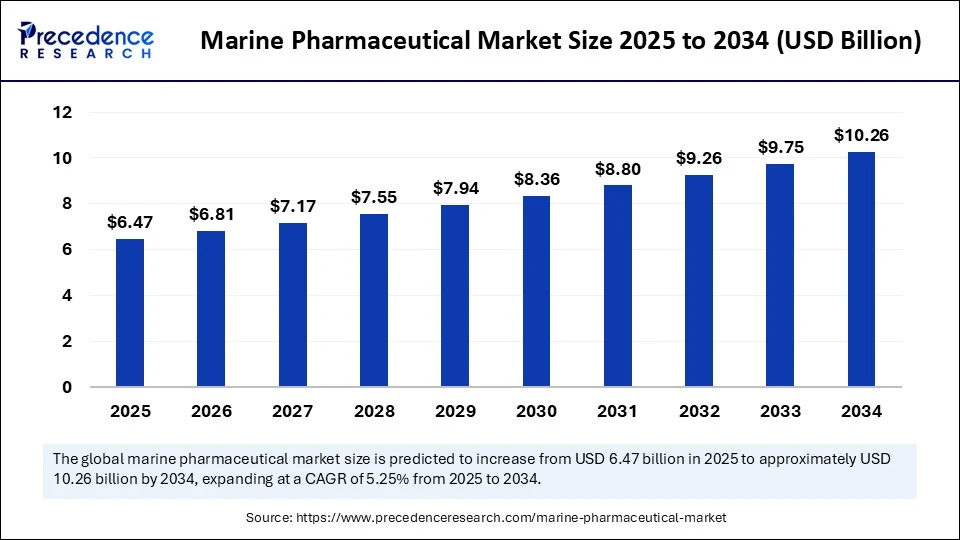
Marine Pharmaceutical Market Key Insights
-
North America led the market in 2024, accounting for the largest share of 37%, while the Asia Pacific region is forecasted to register the fastest growth during the analysis period.
-
Based on source organism, the marine invertebrates segment accounted for the largest share at 38% in 2024, whereas the marine microorganisms segment is expected to expand at the highest CAGR over the forecast period.
-
By compound type, polyketides held the leading market share of 30% in 2024, while the peptides segment is projected to grow at the fastest pace in the coming years.
-
In terms of therapeutic area, the oncology segment dominated with a 42% share in 2024, whereas the neurology segment is anticipated to exhibit the fastest CAGR through 2034.
-
When categorized by product type, approved drugs made up the largest portion at 47% in 2024, while pipeline drugs are forecasted to grow at the highest rate.
-
At the development stage, the clinical trials segment held the top share of 41% in 2024, whereas the preclinical segment is expected to record the highest growth rate.
-
Among end-users, pharmaceutical companies dominated the market with a 45% share in 2024, while marine biotech startups are projected to grow at the fastest CAGR during the forecast timeframe.
Marine Pharmaceutical Market Dynamics
The market is largely driven by the unique chemical diversity offered by marine organisms, which enables the discovery of novel compounds with significant therapeutic potential. Unlike terrestrial sources, marine organisms produce secondary metabolites that are structurally distinct and often more potent, which makes them ideal candidates for developing next-generation drugs. Additionally, the rising global incidence of cancer and drug-resistant infections is pushing the demand for more effective treatments—many of which are being discovered in marine ecosystems. For instance, approved drugs like Trabectedin and Eribulin are marine-derived and have demonstrated success in cancer therapy.
Despite the strong growth potential, the market faces several restraints. High research and development costs, difficulties in cultivating marine organisms, and complex extraction procedures pose significant barriers to entry. Moreover, regulatory compliance and sustainability concerns around marine bioprospecting restrict broader adoption. The uncertain supply chain and ecological impact of sourcing marine organisms further add to the challenges.
However, the market is not without opportunities. The integration of synthetic biology and fermentation technologies has allowed for the biosynthesis of marine compounds in controlled environments, reducing the dependence on natural harvesting. The expansion of marine-derived compounds into wellness segments such as nutraceuticals and cosmeceuticals presents a lucrative avenue. Furthermore, public-private partnerships and international collaborations are enhancing funding and research, enabling broader drug development pipelines.
Role of AI and Emerging Technologies
Artificial intelligence (AI) is playing a transformative role in the evolution of the marine pharmaceutical industry. By applying AI algorithms to vast libraries of marine genomic data, researchers can identify bioactive compounds with therapeutic potential more quickly and accurately. Machine learning models are particularly effective in predicting pharmacological activity, toxicity profiles, and molecular interactions—streamlining the early phases of drug discovery and minimizing costly trial-and-error approaches.
In addition, AI is increasingly being used to simulate marine compound behavior in biological systems, thus enabling virtual screening of drug candidates before physical synthesis and testing. High-throughput screening combined with robotic automation and AI analytics is further enhancing compound identification, helping pharmaceutical companies identify leads from the massive and largely unexplored marine biosphere. This digital revolution in marine pharmacology is expected to reduce time-to-market and improve R&D productivity significantly.
Marine Pharmaceutical Market Regional Insights
North America led the global marine pharmaceutical market in 2024, with the United States accounting for the majority of regional revenue. This dominance is attributed to advanced R&D infrastructure, early regulatory approvals, and government-backed initiatives supporting marine biotechnology. Notable institutions such as the National Institutes of Health (NIH) and NOAA have also played a vital role in funding marine-based drug research.
Asia Pacific, on the other hand, is projected to be the fastest-growing region during the forecast period. Countries like China, Japan, and South Korea are significantly investing in marine science, driven by initiatives such as China’s Marine Economy Development Plan and Japan’s marine pharmacology programs. China, in particular, is focusing on commercializing marine peptides and polysaccharides, while Japan is leading in neuromodulatory marine drugs. The region’s expanding pharmaceutical manufacturing base and increasing focus on natural and sustainable therapies are expected to propel growth further.
Marine Pharmaceutical Market Segment Insights
By source, marine bacteria led the market in 2024 due to their scalability and use in antibiotic and anti-inflammatory compound production. However, marine fungi are gaining attention for their rich metabolic profiles and ability to produce anti-cancer agents and immunosuppressants, positioning them as the fastest-growing source segment.
In terms of compound type, polyketides were the most commonly used, valued for their effectiveness in treating cancers and infections. Peptides, with their high specificity and growing role in targeted drug delivery systems, are projected to grow at the highest CAGR.
The oncology segment held the dominant position among therapeutic areas, bolstered by the successful commercialization of marine-based anti-cancer drugs. However, antiviral therapies are experiencing rising demand due to increased interest in pandemic preparedness and immune-supportive drugs.
Among product types, marine-derived drugs commanded the largest market share, given the number of FDA-approved marine-based therapies. Marine nutraceuticals are anticipated to grow rapidly due to increasing consumer awareness of ocean-derived omega-3s, seaweed extracts, and other bioactives used in health supplements.
By development stage, clinical-stage products accounted for the largest share in 2024, reflecting the ongoing trials for oncology and anti-inflammatory drugs. Nevertheless, preclinical research is expanding the fastest as new marine organisms are being screened using AI and other high-tech tools.
Pharmaceutical companies were the largest end-users of marine-derived drugs, as they control the majority of R&D funding and commercialization. However, academic and research institutions are seeing increasing traction due to their critical role in early drug discovery and partnerships with biotech firms.
Market Growth Factors
-
Surge in cancer and infectious disease cases worldwide requiring new therapeutic classes
-
Unique molecular structures of marine organisms enabling first-in-class drug discoveries
-
Rising public and private investments in marine biotechnology and pharmacology
-
Growing use of AI and synthetic biology to enhance marine drug development
-
Increasing interest in sustainable and eco-friendly bioactive compound sources
-
Expansion of marine-derived ingredients into wellness, nutrition, and cosmeceutical sectors
-
Regulatory support for rare disease and orphan drug development using marine compounds
Market Scope
| Metric | Value |
|---|---|
| Market Size (2024) | USD 6.15 Billion |
| Market Size (2025) | USD 6.47 Billion |
| Market Size (2034) | USD 10.26 Billion |
| CAGR (2025–2034) | 5.25% |
| Dominant Region | North America |
| Fastest Growing Region | Asia Pacific |
| Base Year | 2024 |
| Forecast Period | 2025–2034 |
| Segments Covered | Source, Compound Type, Therapeutic Area, Product Type, Development Stage, End User, Region |
| Regions Covered | North America, Europe, Asia Pacific, Latin America, Middle East & Africa |
-
PharmaMar S.A.
-
Marinomed Biotech AG
-
Abyss Pharma
-
SeaPharma Inc.
-
Nereus Pharmaceuticals
-
Sirenas Marine Discovery
-
Ocean BioSciences Ltd.
-
ChanBio Inc.
-
Blue Ocean Biotech
-
AquaBioTech Group
-
Algica AB
-
Biomar Microbial Technologies
-
Cyanea BioSciences
-
Okinawa Institute of Science and Technology (OIST)
-
Zymvol Biomodeling
Recent Developments:
-
In February 2025, PharmaMar announced Phase II trial success for PM123, a marine-derived drug candidate for metastatic ovarian cancer.
-
In May 2024, Marinomed Biotech expanded its collaboration with Takeda Pharmaceuticals to develop marine-based antiviral nasal sprays.
-
In December 2024, Sirenas launched its AI-driven screening platform “Nereid” to accelerate marine compound discovery.
Read Also: Automated Truck Loading System Market
You can place an order or ask any questions, please feel free to contact at sales@precedenceresearch.com |+1 804 441 9344
