
 by
by 
Market Overview
The Lithium-ion Battery Electrolyte Solvent Market has emerged as a crucial segment in the global energy storage industry, driven by the rapid adoption of electric vehicles (EVs), renewable energy storage systems, and portable electronics. Lithium-ion batteries are widely used due to their high energy density, long cycle life, and lightweight properties, and the electrolyte solvent is a critical component determining the battery’s performance, safety, and longevity.
Electrolyte solvents serve as the medium for lithium-ion transport between the anode and cathode, enabling the electrochemical reactions necessary for energy storage and release. Traditionally, carbonate-based solvents such as ethylene carbonate (EC), dimethyl carbonate (DMC), diethyl carbonate (DEC), and propylene carbonate (PC) dominate the market. These solvents are selected for their high dielectric constant, low viscosity, and thermal stability.
The increasing demand for high-performance lithium-ion batteries in automotive, consumer electronics, and industrial applications is expanding the Lithium-ion Battery Electrolyte Solvent Market. Technological advancements, rising energy storage requirements, and government incentives for EV adoption are fueling global growth.
AI and Innovation
Artificial Intelligence (AI) is revolutionizing the Lithium-ion Battery Electrolyte Solvent Market by accelerating the development of novel electrolyte formulations. AI-driven computational modeling allows researchers to simulate lithium-ion transport mechanisms, identify optimal solvent combinations, and predict battery performance under various conditions.
Machine learning algorithms analyze large datasets from experimental and real-world battery performance to recommend electrolyte compositions that improve energy density, stability, and safety. Additionally, AI supports predictive maintenance of batteries by monitoring electrolyte degradation, helping manufacturers optimize lifecycle management and prevent failures.
Innovations in electrolyte solvents include the development of solid-state electrolytes, gel polymers, and hybrid systems, which improve safety and enable next-generation high-voltage lithium-ion batteries. Nanotechnology integration is also being explored to enhance ionic conductivity and thermal stability. These advancements ensure that the Lithium-ion Battery Electrolyte Solvent Market evolves rapidly, supporting the growing demand for safer, higher-performance batteries.
Future Trends of Market
-
Solid-State Electrolytes: Research in solid-state electrolyte solvents promises higher energy density and improved safety, potentially replacing traditional liquid solvents in next-gen batteries.
-
High-Voltage Battery Systems: Electrolyte solvents capable of operating at higher voltages are being developed for advanced EV and industrial applications.
-
Green Electrolytes: Environmentally friendly, low-toxicity solvents are gaining attention due to regulatory pressures and sustainability goals.
-
Additive-Enhanced Performance: Electrolyte additives that enhance stability, reduce dendrite formation, and extend battery life are becoming increasingly important.
-
Customized Electrolytes: Tailored formulations for specific applications, such as EVs, grid storage, and consumer electronics, are expected to drive innovation.
Rising Demands of Market
The demand for Lithium-ion Battery Electrolyte Solvent is rising across multiple sectors. In the automotive industry, the global shift toward electric vehicles is the primary growth driver. Governments worldwide are offering incentives and subsidies to accelerate EV adoption, increasing the need for high-performance battery components, including electrolyte solvents.
In renewable energy, large-scale energy storage systems rely heavily on lithium-ion batteries to manage grid fluctuations and store solar and wind energy. High-efficiency electrolytes enhance battery cycle life and performance, making them critical for utility-scale energy storage solutions.
Consumer electronics, such as smartphones, laptops, and wearable devices, continue to demand lightweight, long-lasting batteries, further boosting electrolyte solvent consumption. Additionally, industrial applications such as drones, robotics, and aerospace are driving the need for specialized electrolyte solutions tailored to extreme operating conditions.
Key Market Highlights
-
Dominance of carbonate-based solvents (EC, DMC, DEC, PC) with high dielectric constants.
-
Growing interest in solid-state and gel polymer electrolyte systems.
-
Rising R&D investments in high-voltage and high-temperature electrolytes.
-
Increasing adoption of lithium-ion batteries in EVs and grid storage solutions.
-
Development of environmentally friendly, low-toxicity electrolyte solvents.
-
Strategic partnerships between battery manufacturers and chemical suppliers to optimize performance and supply chains.
These highlights indicate the market’s dynamic nature and its critical role in the global battery ecosystem.
Market Growth Drivers
-
EV Adoption – Rapid growth of electric vehicles globally is the primary driver for lithium-ion battery electrolyte demand.
-
Energy Storage Expansion – Increasing deployment of renewable energy systems necessitates high-performance batteries.
-
Technological Innovation – Advancements in solvent chemistry, additive technology, and solid-state electrolytes boost market growth.
-
Consumer Electronics Demand – Growing usage of smartphones, laptops, and wearables drives electrolyte solvent requirements.
-
Government Incentives – Subsidies, tax benefits, and regulations promoting EVs and energy storage indirectly stimulate electrolyte solvent demand.
Also Read@ https://www.dailytechbulletin.com/semiconductor-wafer-transfer-robots-market/
Restraints
Despite strong growth, the Lithium-ion Battery Electrolyte Solvent Market faces certain challenges:
-
High Cost: Advanced solvents and additives may increase battery production costs, limiting affordability.
-
Safety Concerns: Traditional carbonate-based solvents are flammable and require careful handling.
-
Raw Material Volatility: Fluctuations in chemical and lithium supply can affect solvent availability and pricing.
-
Technical Complexity: Developing high-performance, stable solvents requires specialized R&D expertise.
-
Environmental Regulations: Strict rules regarding solvent toxicity and disposal can constrain growth.
Opportunities
The market presents numerous opportunities for expansion and innovation:
-
Solid-State Batteries: Electrolyte solvents designed for solid-state systems offer high potential for safety and performance improvements.
-
High-Energy Batteries: Development of high-voltage electrolyte solvents for EV and grid applications.
-
Green Chemistry: Eco-friendly solvents with low toxicity and recyclability provide opportunities in regulated markets.
-
Emerging Markets: Asia-Pacific, Latin America, and Africa offer significant growth potential due to increasing EV penetration and renewable energy projects.
-
Collaborations and Partnerships: Strategic alliances between battery manufacturers, chemical suppliers, and research institutes can accelerate innovation.
Regional Insights
North America
North America dominates the Lithium-ion Battery Electrolyte Solvent Market due to advanced automotive and energy storage sectors, strong R&D capabilities, and supportive government initiatives for EVs and renewable energy projects.
Europe
Europe’s market is driven by stringent environmental regulations, growing EV adoption, and active investments in renewable energy storage solutions. Germany, France, and the UK are leading contributors.
Asia-Pacific
Asia-Pacific is the fastest-growing region, with China, Japan, South Korea, and India playing key roles. High EV penetration, increasing consumer electronics demand, and government subsidies accelerate market growth.
Latin America
Latin America’s market is expanding as countries such as Brazil and Mexico invest in renewable energy infrastructure and EV adoption programs.
Middle East & Africa
The region is in early development but shows potential due to growing industrial applications, renewable energy projects, and urbanization.
Lithium-ion Battery Electrolyte Solvent Market Companies
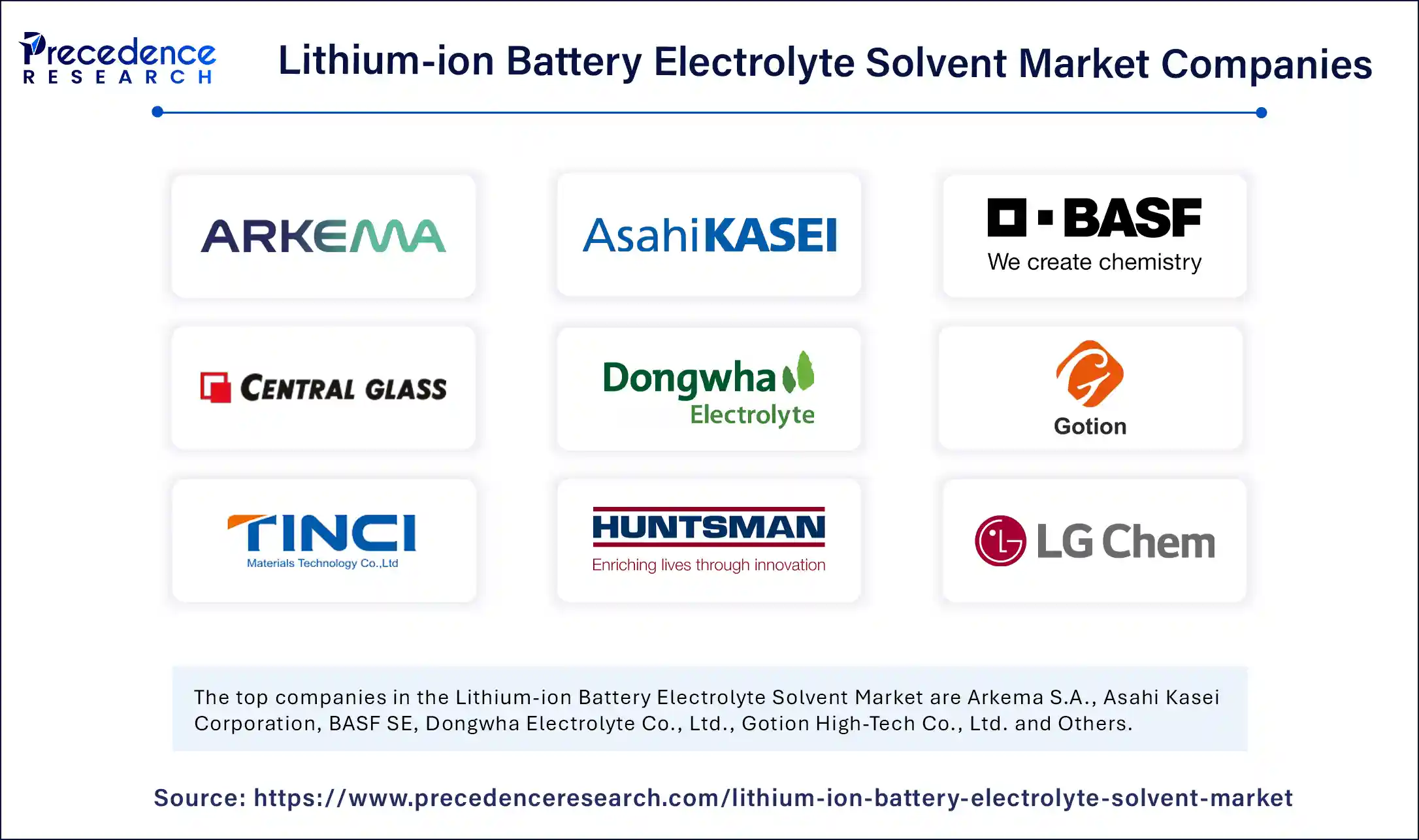
- Arkema S.A.
- Asahi Kasei Corporation
- BASF SE
- Central Glass Co., Ltd.
- Dongwha Electrolyte Co., Ltd.
- Gotion High-Tech Co., Ltd.
- Guangzhou Tinci Materials Technology Co., Ltd.
- Huntsman International LLC
- Jiangsu Guotai Super Power New Materials Co., Ltd.
- LG Chem Ltd.
- Lotte Chemical Corporation
- Merck KGaA
- Mitsubishi Chemical Group Corporation
- Mitsui Chemicals, Inc.
- Panax-Etec
- Shandong Shida Shenghua Chemical Group Co., Ltd.
- Shenzhen Capchem Technology Co., Ltd.
- Solvay S.A.
- Stella Chemifa Corporation
- UBE Corporation
Get Free sample link @ https://www.precedenceresearch.com/sample/6846
