
 by
by 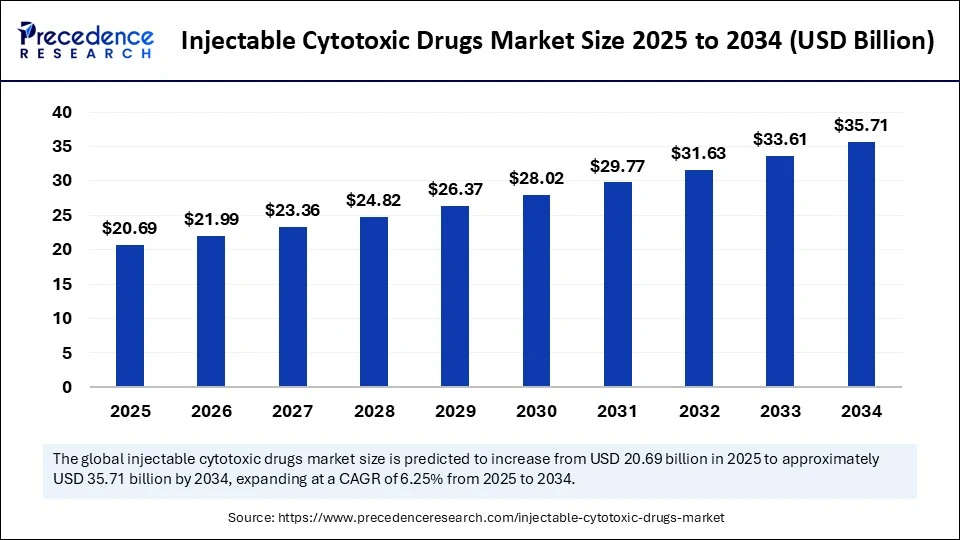
Injectable Cytotoxic Drugs Market Key Takeaways
- In terms of revenue, the global injectable cytotoxic drugs market was valued at USD 19.48 billion in 2024.
- It is projected to reach USD 35.71 billion by 2034.
- The market is expected to grow at a CAGR of 6.25% from 2025 to 2034.
- North America dominated the injectable cytotoxic drugs market with the largest share of 40% in 2024.
- Asia Pacific is anticipated to witness the fastest growth during the forecasted years.
- By drug class, the alkylating agents segment captured the biggest market share of 29% in 2024.
- By drug class, the antimetabolities segment is anticipated to show considerable growth, under which the cytarabine sub-segment is likely to lead the charge in the market over the forecast period.
- By indication, the breast cancer segment contributed the highest market share of 18% in 2024.
- By indication, the hematological malignancies segment is anticipated to show considerable growth over the forecast period.
- By end user, the hospitals segment held the biggest market share of 59% in 2024.
- By end user, the ambulatory surgical centers segment is anticipated to show considerable growth over the forecast period.
- By route of administration, the intravenous injection/infusion segment generated the major market share of 81% in 2024.
- By route of administration, the intramuscular segment is anticipated to show considerable growth over the forecast period.
- By drug origin, the branded cytotoxic drugs segment held a significant market share in 2024.
- By drug origin, the generic cytotoxic drugs segment is anticipated to show considerable growth over the forecast period.
How is AI Integration Transforming the Injectable Cytotoxic Drugs Market?
Artificial Intelligence is playing a transformative role in the cytotoxic drugs market by streamlining drug development, advancing clinical decision-making, and facilitating personalized treatment approaches. AI accelerates the identification and optimization of novel cytotoxic compounds by analyzing vast datasets on drug efficacy and toxicity, thereby reducing R&D costs and timelines.
In clinical settings, AI-powered imaging and diagnostic tools enable real-time monitoring of tumor responses to injectable cytotoxic agents, supporting faster, data-driven treatment modifications. Additionally, AI strengthens supply chain operations by forecasting drug demand across healthcare facilities, ensuring optimal inventory levels and timely access to critical therapies.
Market Overview
The injectable cytotoxic drugs market forms the heart of modern oncology therapeutics, with intravenous or intramuscular formulations delivering chemotherapeutic agents like taxanes, anthracyclines, platinum compounds, antimetabolites, and novel antibody‑drug conjugates (ADCs).
Used across solid tumors and hematologic malignancies, these injectables offer dose-controlled cytotoxicity and are widely adopted in hospitals, infusion centers, and specialty clinics. As cancer incidence rises globally and personalized treatment regimens evolve, demand for both legacy and next-generation cytotoxic injectables remains strong. Biopharma investment continues into refining formulations, enabling extended-release, targeted payload delivery, and integration with immunotherapeutics.
Market Drivers
A key driver is the persistent global cancer burden: increasing incidence across breast, lung, lymphoma, and GI cancers drives demand for established cytotoxic regimens. Evolving treatment protocols that combine standard cytotoxic agents with targeted therapies or immunotherapy maintain reliance on injectable formats.
Advancements in formulation science, such as liposomal encapsulation and ADC technology, increase efficacy while reducing systemic toxicity. Hospital-centric cancer care models continue to prefer infusion-based chemotherapy due to controlled dosing and monitoring capacity. Price and reimbursement frameworks favor well-established cytotoxic drugs — many generic injectable agents offer predictable cost and efficacy profiles for payers and providers.
Opportunities
Next‑generation ADCs and cytotoxic payloads targeting specific antigens allow providers to deliver high-potency agents directly to tumor cells, minimizing off-target effects. Novel nanocarrier or liposomal formulations enable sustained release, reduced infusion frequency, and better tolerability.
Emerging markets expansion: injectable cytotoxic penetration remains low in many parts of Asia, Latin America, and Africa—growing middle-class populations and expanding oncology infrastructure present opportunities. Hospital outpatient infusion centers and home‑infusion services offer new delivery channels. Combination therapy protocols—injectables paired with immunomodulators or targeted small molecules—open sophisticated regimen design that differentiates providers and enhances clinical outcomes.
Challenges
Major challenges include dose-limiting toxicities and cumulative organ damage (e.g. cardiotoxicity, nephrotoxicity) associated with many cytotoxic agents—requiring careful dose scheduling and supportive care. Development of resistance: tumors may evolve drug resistance, limiting the efficacy of standard injectable agents over time.
Complex supply and cold‑chain logistics for liposomal or oncology-specific formulations. Competition from novel oral targeted therapies and immunoconjugates: patients and providers may prefer oral regimens or newer biologic formats that reduce infusion burden. Stringent regulatory and manufacturing standards: injectable cytotoxic agents must meet GMP sterility requirements, with batch testing and containment protocols, which raise production complexity and cost.
Recent Developments
Leading pharmaceutical companies have launched new ADCs entering late-phase trials targeting solid tumors with cytotoxic payloads such as tubulin inhibitors and DNA intercalators. Novel liposomal cytotoxic formulations (e.g. encapsulated paclitaxel or doxorubicin derivatives) have received early approval in regional markets, showing improved tolerability and wider therapeutic windows. Oncology infusion center chains are piloting home‑infusion models with remote toxicology monitoring for eligible patients.
Emerging biotech firms are developing nanoparticle-based cytotoxic delivery platforms enabling multi‑drug payload combinations in single injections. Hospitals are standardizing pharmacogenomic screening to tailor dosing of injectable agents like platinum and antimetabolites, improving efficacy and reducing adverse effects. Collaborative research initiatives are underway combining injectable cytotoxic regimens with newer immunotherapies to evaluate synergistic effects in resistant cancers.
Injectable Cytotoxic Drugs Market Companies
- Pfizer Inc.
- Novartis AG (Sandoz – generics)
- Teva Pharmaceutical Industries Ltd.
- Roche Holding AG
- Sanofi S.A.
- Bristol-Myers Squibb
- Fresenius Kabi
- Mylan N.V. (Viatris)
- Hikma Pharmaceuticals PLC
- Sun Pharmaceutical Industries Ltd.
- Eli Lilly and Company
- Dr. Reddy’s Laboratories
- Cipla Ltd.
- Aurobindo Pharma
- Accord Healthcare
- Hospira (a Pfizer company)
- Intas Pharmaceuticals Ltd.
- Natco Pharma
- Amneal Pharmaceuticals
- Zydus Lifesciences Ltd.
Segments Covered in the Report
By Drug Class
- Alkylating Agents
- Cyclophosphamide
- Ifosfamide
- Busulfan
- Antimetabolites
- 5-Fluorouracil (5-FU)
- Methotrexate
- Cytarabine
- Plant Alkaloids
- Vincristine
- Vinblastine
- Paclitaxel, Docetaxel
- Antitumor Antibiotics
- Doxorubicin
- Bleomycin
- Mitomycin
- Platinum-Based Drugs
- Cisplatin
- Carboplatins
- Oxaliplatin
- Combination Cytotoxic Regimens (e.g., CHOP, FOLFIRINOX)
By Indication
- Breast Cancer
- Lung Cancer
- Colorectal Cancer
- Hematological Malignancies
- Ovarian & Cervical Cancer
- Pancreatic & Liver Cancer
- Bladder & Prostate Cancer
- Others (Sarcoma, Head & Neck, Gastric)
By End User
- Hospitals
- Cancer & Specialty Clinics
- Ambulatory Surgical Centers (ASCs)
- Homecare Settings (with mobile infusion units)
- Government Oncology Centers
By Route of Administration
- Intravenous (IV) Injection/Infusion
- Intramuscular (IM)
- Intrathecal
- Intraperitoneal (used in HIPEC protocols)
- Subcutaneous (for select agents)
By Drug Origin
- Branded Cytotoxic Drugs
- Generic Cytotoxic Drugs
- Compounded Cytotoxic Preparations (niche)
By Region
- North America
- Europe
- Asia Pacific
- Latin America
- Middle East & Africa
Get Free sample @ https://www.precedenceresearch.com/sample/6505
