
 by
by 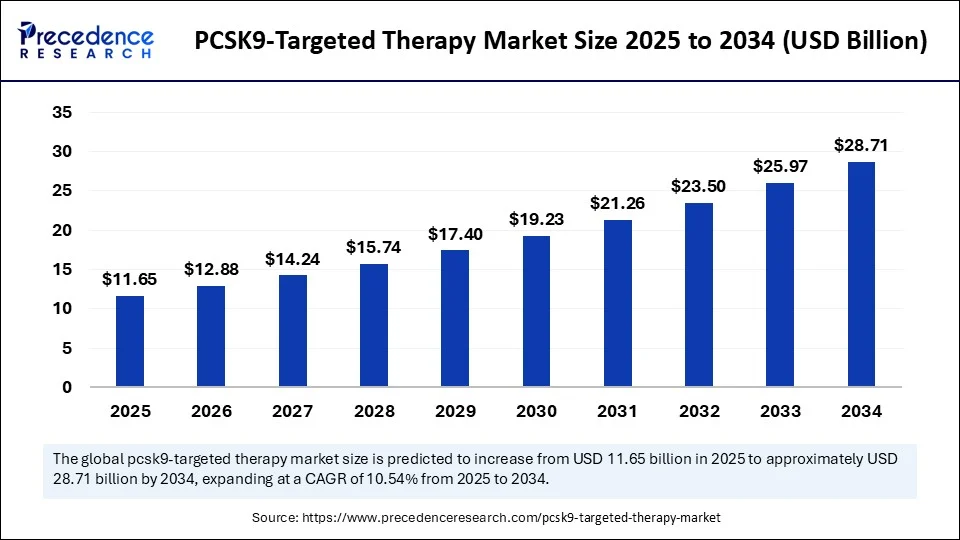
PCSK9-Targeted Therapy Market Key Points
-
The global PCSK9-targeted therapy market was valued at USD 10.54 billion in 2024 and is projected to reach USD 28.71 billion by 2034, growing at a CAGR of 10.54% from 2025 to 2034.
-
North America led the market with a 46% share in 2024, while the Asia Pacific region is anticipated to grow at a significant CAGR during the forecast period.
-
By drug type/modality, monoclonal antibodies (mAbs) dominated the market in 2024, and siRNA-based therapies are expected to grow at a notable CAGR from 2025 to 2034.
-
Based on indication, atherosclerotic cardiovascular disease (ASCVD) accounted for the largest market share in 2024, whereas homozygous familial hypercholesterolemia (HoFH) is projected to expand steadily over the forecast period.
-
In terms of patient type, the secondary prevention (with history of ASCVD) segment held the highest market share in 2024, while statin-intolerant patients are expected to show strong growth through 2034.
-
By route of administration, subcutaneous injections led the market in 2024, while intravenous injections are expected to grow at a consistent CAGR over the coming years.
-
Among distribution channels, hospital pharmacies held the dominant share in 2024, with online pharmacies anticipated to grow rapidly during the forecast period.
PCSK9-Targeted Therapy Market Overview
The PCSK9-targeted therapy market is emerging as one of the most promising segments in the cardiovascular treatment landscape, particularly for patients with hypercholesterolemia and atherosclerotic cardiovascular disease (ASCVD) who are unresponsive to conventional statin therapy. Proprotein convertase subtilisin/kexin type 9 (PCSK9) plays a critical role in cholesterol metabolism by regulating the degradation of LDL receptors, making it a key target for therapies aimed at lowering LDL cholesterol (LDL-C) levels. Since the approval of the first PCSK9 inhibitors, the market has seen significant clinical and commercial interest. The market is projected to grow at a strong pace over the next decade, supported by increasing awareness about cardiovascular risk, better diagnosis rates, and advancements in both biologics and RNA-based therapies targeting PCSK9.
PCSK9-Targeted Therapy Market Growth Factors
The market’s growth is being driven by a confluence of medical, demographic, and technological factors. A key driver is the global rise in cardiovascular disease, which remains the leading cause of death worldwide. Many patients remain inadequately treated with statins alone, especially those with familial hypercholesterolemia (FH) or statin intolerance, necessitating alternative therapies like PCSK9 inhibitors.
The strong efficacy profile of PCSK9-targeted therapies—capable of reducing LDL-C levels by 50–60%—has made them an essential addition to lipid-lowering regimens. Moreover, an aging global population and a growing burden of lifestyle-related diseases like obesity and type 2 diabetes continue to expand the eligible patient pool. Increasing investments in biotech innovation and robust clinical pipelines featuring next-generation monoclonal antibodies, small-interfering RNA (siRNA) therapies, and even gene-editing approaches are also reinforcing long-term market potential.
Market Scope
| Report Coverage | Details |
| Market Size by 2034 | USD 28.71 Billion |
| Market Size in 2025 | USD 11.65 Billion |
| Market Size in 2024 | USD 10.54 Billion |
| Market Growth Rate from 2025 to 2034 | CAGR of 10.54% |
| Dominating Region | North America |
| Fastest Growing Region | Asia Pacific |
| Base Year | 2024 |
| Forecast Period | 2025 to 2034 |
| Segments Covered | Drug Type/Modality, Indication, Route of Administration, Distribution Channel, Patient Type, and Region |
| Regions Covered | North America, Europe, Asia-Pacific, Latin America, and Middle East & Africa |
AI Role in the Market
Artificial intelligence is playing a transformative role in the PCSK9-targeted therapy landscape by enhancing research efficiency, patient selection, and treatment personalization. AI is helping researchers accelerate drug discovery by modeling PCSK9 protein structures, simulating binding affinities, and predicting off-target effects of potential inhibitors. Machine learning tools are also being applied to genomic and proteomic data to identify novel biomarkers that may predict therapeutic response to PCSK9 inhibition.
In clinical practice, AI-driven decision-support tools are assisting physicians in identifying high-risk patients based on their lipid profiles, comorbidities, and genetic markers. Additionally, AI is enabling real-world evidence analysis through electronic health records and claims data, allowing for better post-market surveillance and assessment of long-term outcomes in diverse patient populations.
Market Drivers
The growing incidence of cardiovascular disease is the principal driver behind the increasing demand for PCSK9-targeted therapies. Additionally, PCSK9 inhibitors address a clear unmet medical need in patients who cannot achieve target LDL-C levels with statins alone or who are intolerant to them. Clinical guidelines from organizations like the American Heart Association and the European Society of Cardiology have increasingly endorsed the use of PCSK9 inhibitors in high-risk patients, which is driving adoption.
Furthermore, the expanding availability of biosimilar and alternative formulations, especially siRNA-based drugs like inclisiran, is increasing access and broadening treatment options. The commercial success of existing PCSK9 monoclonal antibodies has also validated the market, encouraging more entrants and innovations.
Opportunities
There are several promising opportunities in the PCSK9-targeted therapy space. The development of cost-effective, long-acting therapies—such as siRNA and gene-editing technologies—is likely to drive greater patient adherence and expand market reach. As healthcare systems globally place increased focus on preventive medicine and chronic disease management, there is potential for broader insurance coverage and reimbursement support for these therapies.
The expansion into emerging markets where cardiovascular disease is rapidly growing presents another area of opportunity, particularly as awareness and healthcare infrastructure improve. Furthermore, the exploration of PCSK9’s role in other metabolic and inflammatory pathways may open the door to new indications, extending the market beyond cholesterol management.
Challenges
Despite its potential, the PCSK9-targeted therapy market faces several challenges. One of the most significant has been the historically high cost of monoclonal antibody-based treatments, which initially limited patient access and led to slow market uptake. Although pricing has become more competitive, cost remains a concern in both developed and developing regions.
Another challenge lies in ensuring patient compliance with injectable therapies, especially in long-term management scenarios. There are also scientific and regulatory complexities in developing and gaining approval for newer therapies like siRNA and gene editing, which require long-term safety data and sophisticated manufacturing capabilities. Additionally, the need for specialized storage and administration infrastructure for biologics may limit adoption in low-resource settings.
PCSK9-Targeted Therapy Market Regional Outlook
North America currently leads the global PCSK9-targeted therapy market due to high healthcare spending, rapid adoption of innovative therapies, and a strong clinical and regulatory framework supporting cardiovascular care.
The United States, in particular, has seen increased uptake of both monoclonal antibodies and siRNA-based therapies, supported by favorable guidelines and growing insurance coverage. Europe follows closely, with countries like Germany, the UK, and France showing strong adoption, although variations in reimbursement policies can affect uniform access.
The Asia-Pacific region is projected to experience the fastest growth over the coming years, driven by increasing cardiovascular disease prevalence, expanding middle-class populations, and greater awareness of preventive health measures. However, access and affordability challenges persist in many countries across this region.
Latin America and the Middle East & Africa are still emerging markets for PCSK9 therapies, but rising investment in healthcare infrastructure and chronic disease management may pave the way for gradual uptake in the future.
PCSK9-Targeted Therapy Market Companies
- Amgen Inc.
- Sanofi
- Regeneron Pharmaceuticals, Inc.
- Novartis AG
- Alnylam Pharmaceuticals
- The Medicines Company (acquired by Novartis)
- Eli Lilly and Company
- Arrowhead Pharmaceuticals
- Silence Therapeutics
- Verve Therapeutics
- Ionis Pharmaceuticals
- AstraZeneca plc
- Pfizer Inc.
- Roche Holding AG
- Cerenis Therapeutics
- Hansa Biopharma
- Sino Biopharmaceutical Limited
- Lexicon Pharmaceuticals
- MeiraGTx Holdings
- Beam Therapeutics
Segment Covered in the Report
By Drug Type / Modality
- Monoclonal Antibodies (mAbs)
- Alirocumab
- Evolocumab
- siRNA-based Therapies
- Inclisiran
- Gene Editing & Other Novel Modalities
- CRISPR-based approaches
- Antisense oligonucleotides (ASOs)
By Indication
- Heterozygous Familial Hypercholesterolemia (HeFH)
- Atherosclerotic Cardiovascular Disease (ASCVD)
- Homozygous Familial Hypercholesterolemia (HoFH)
- Hyperlipidemia (Non-FH)
By Route of Administration
- Subcutaneous Injection
- Intravenous Injection
- Oral (in pipeline)
By Distribution Channel
- Hospital Pharmacies
- Retail Pharmacies
- Online Pharmacies
By Patient Type
- Primary Prevention (High Risk, No History of ASCVD)
- Secondary Prevention (With History of ASCVD)
- Statin-Intolerant Patients
Also Read: Ambulatory Infusion Centers Market
You can place an order or ask any questions, please feel free to contact at sales@precedenceresearch.com |+1 804 441 9344
