
 by
by 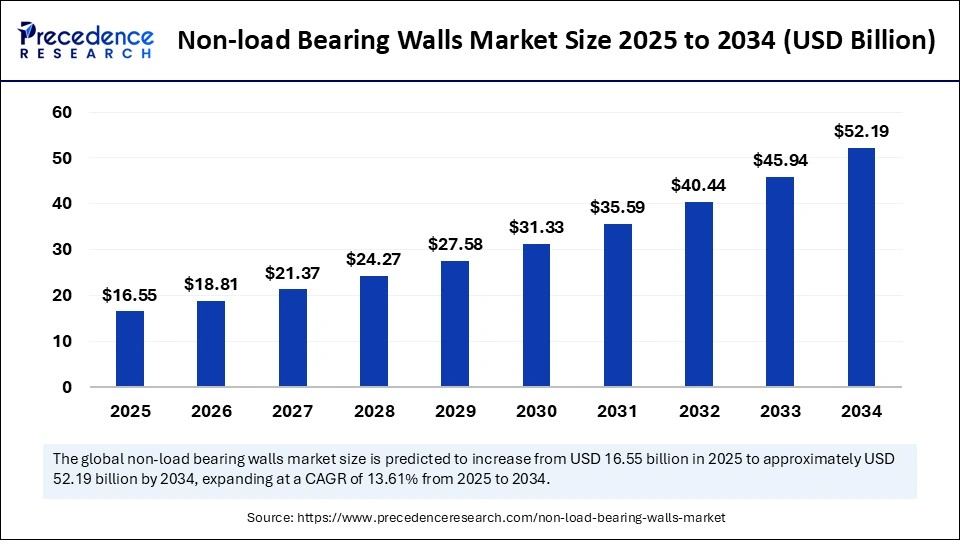
Non-load Bearing Walls Market Key Highlights
-
North America dominated the non-load bearing walls market with the largest revenue share of 49% in 2024.
-
Asia Pacific is expected to expand at a significant CAGR from 2025 to 2034.
-
By material type, the gypsum board segment held a significant share of the market in 2024.
-
The metal studs segment, by material type, is projected to grow at a considerable CAGR between 2025 and 2034.
-
By system type, the traditional segment contributed the biggest market share in 2024.
-
The prefabricated segment, by system type, is projected to expand at a significant CAGR during the forecast period.
-
By construction type, the residential segment dominated the market in 2024.
-
The commercial segment, by construction type, is expected to grow at a significant CAGR over the projected period.
-
By end-use, the new construction segment held the major revenue share of 64% in 2024.
-
The renovation and remodeling segment, by end-use, is anticipated to grow at a notable CAGR in the coming years.
Market Overview and Growth Outlook
Non-load bearing walls serve non-structural functions in buildings, such as dividing interior spaces, providing insulation, or enhancing aesthetics. These walls are commonly made from materials like drywall, glass, metal studs, or concrete blocks and are used extensively in both residential and commercial constructions. The global shift toward faster, lighter, and more flexible building methods has significantly increased the reliance on these types of walls. As smart cities, green buildings, and modular housing projects rise, so does the demand for scalable, non-structural solutions.
Role of AI in the Market
Artificial intelligence is transforming construction planning and interior design, including the development and installation of non-load bearing walls. AI-driven software tools help architects and engineers design optimal wall layouts that reduce material waste and improve space utilization. Moreover, AI supports robotics and automation in modular construction, leading to faster, more precise installations. These capabilities contribute to higher efficiency and cost-effectiveness across construction sites.
Market Growth Factors
Several factors are accelerating the growth of the non-load bearing walls market. Urbanization across developing countries is spurring new residential and commercial construction. The demand for open and flexible interior designs in offices and co-working spaces has also increased. Furthermore, the rise of green buildings and energy-efficient regulations pushes developers to opt for insulated and lightweight non-load bearing solutions that reduce overall structural loads while maintaining performance.
Market Scope
| Report Coverage | Details |
| Market Size by 2034 | USD 52.19 Billion |
| Market Size in 2025 | USD 16.55 Billion |
| Market Size in 2024 | USD 14.57 Billion |
| Market Growth Rate from 2025 to 2034 | CAGR of 13.61% |
| Dominating Region | North America |
| Fastest Growing Region | Asia Pacific |
| Base Year | 2024 |
| Forecast Period | 2025 to 2034 |
| Segments Covered | Material Type, System Type, Construction Type, End Use, and Region |
| Regions Covered | North America, Europe, Asia-Pacific, Latin America, and Middle East & Africa |
Market Drivers
Key drivers include increased adoption of prefabricated construction methods, faster build timelines, and reduced labor requirements. Additionally, regulatory frameworks promoting sustainability have led to greater interest in lightweight, recyclable wall materials. Technological advancements in construction—such as 3D design and offsite modular assembly—further enhance the market’s efficiency and appeal.
Market Opportunities
Emerging economies in Asia-Pacific, Africa, and Latin America offer lucrative opportunities for market expansion due to rising construction activity and the shift toward affordable housing. The trend toward smart buildings also opens up opportunities for integrating technology, such as soundproofing and energy-efficient materials, into non-load bearing wall systems. Furthermore, increasing demand for aesthetically pleasing and customizable interiors in luxury residential and commercial spaces supports product innovation.
Market Challenges
Despite strong growth prospects, the market faces challenges such as building code compliance and fire safety concerns. High costs associated with advanced modular materials or smart panels may deter price-sensitive consumers. In addition, construction firms may face skill shortages when dealing with new materials or prefabricated systems, requiring training and investment in workforce development.
Regional Outlook
North America dominates the non-load bearing walls market, driven by rapid adoption of green construction and prefabricated technologies. Europe follows closely, benefitting from strict energy regulations and a focus on sustainable building design. Meanwhile, the Asia Pacific region is poised for the fastest growth due to urban expansion, population growth, and government infrastructure initiatives in countries like India, China, and Indonesia. Latin America and the Middle East & Africa are slowly emerging as promising markets as real estate development gains momentum.
Non-load Bearing Walls Market Companies
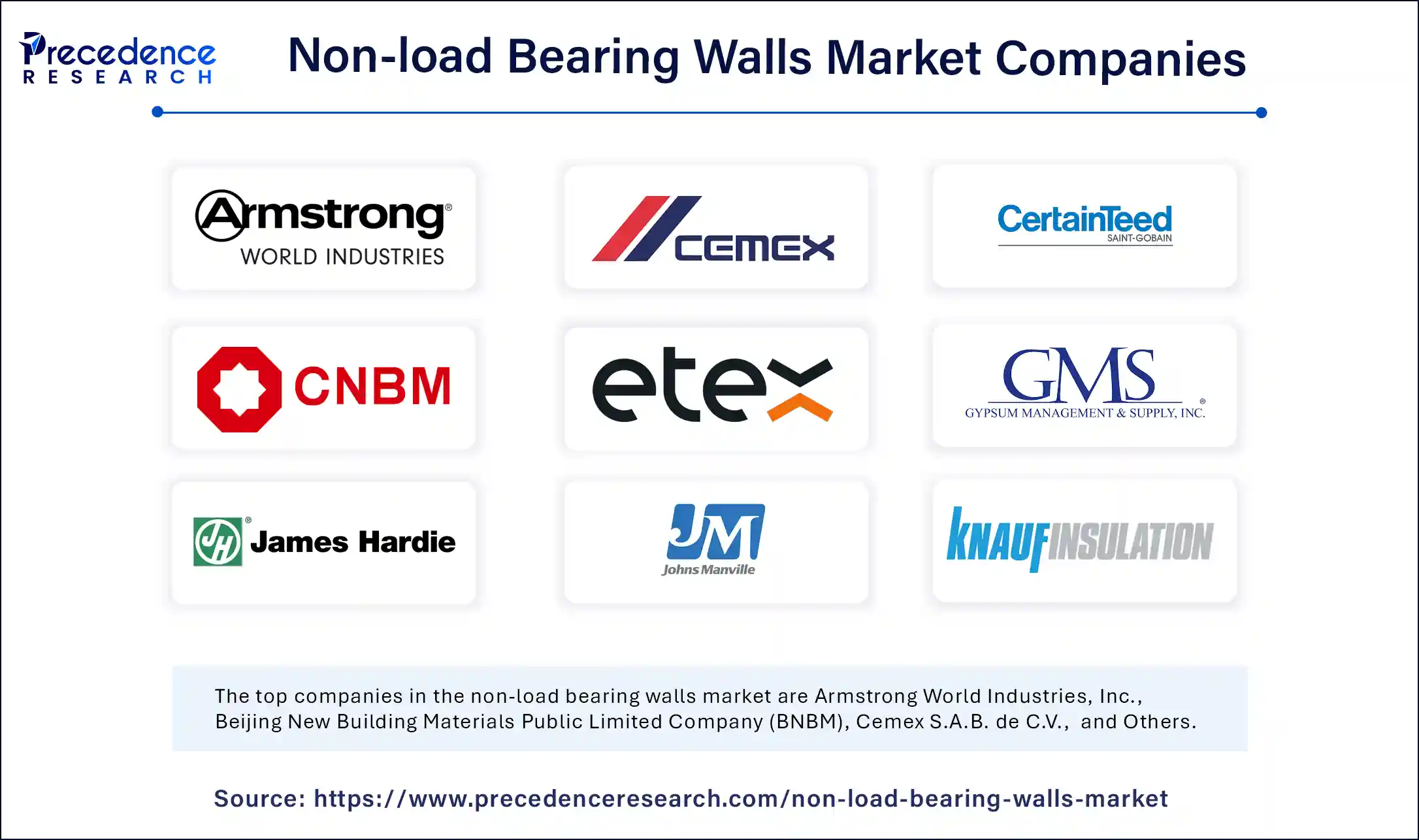
- Armstrong World Industries, Inc.
- Beijing New Building Materials Public Limited Company (BNBM)
- Cemex S.A.B. de C.V.
- CertainTeed Corporation
- China National Building Material Corporation (CNBM)
- Etex Group
- Gypsum Management & Supply, Inc.
- James Hardie Industries plc
- Johns Manville Corporation
- Knauf Insulation GmbH
- LafargeHolcim Ltd.
- Rockwool International A/S
- Saint-Gobain S.A.
- Schluter Systems L.P.
- USG Corporation
Future Outlook and Trends
Looking ahead, the market is expected to shift toward increased automation, digital design integration, and sustainable material usage. Prefabricated and 3D-printed non-load bearing walls are anticipated to become more mainstream. Additionally, the integration of smart sensors for soundproofing, temperature control, and adaptive lighting will revolutionize how non-load bearing walls contribute to building performance and comfort.
Segments Covered in the Report
By Material Type
- Concrete
- Glass
- Gypsum Board
- Metal Studs
- Wood Studs
- Others
By System Type
- Modular
- Pre-Fabricated
- Traditional
By Construction Type
- Commercial
- Industrial
- Residential
By End Use
- New Construction
- Renovation and Remodeling
By Region
- North America
- Europe
- Asia Pacific
- Latin America
- Middle East
- Africa
Read Also: Pedestrian Access Control System Market
Get this report to explore global market size, share, CAGR, and trends, featuring detailed segmental analysis and an insightful competitive landscape overview @ https://www.precedenceresearch.com/sample/6134
You can place an order or ask any questions, please feel free to contact at sales@precedenceresearch.com|+1 804 441 9344
